
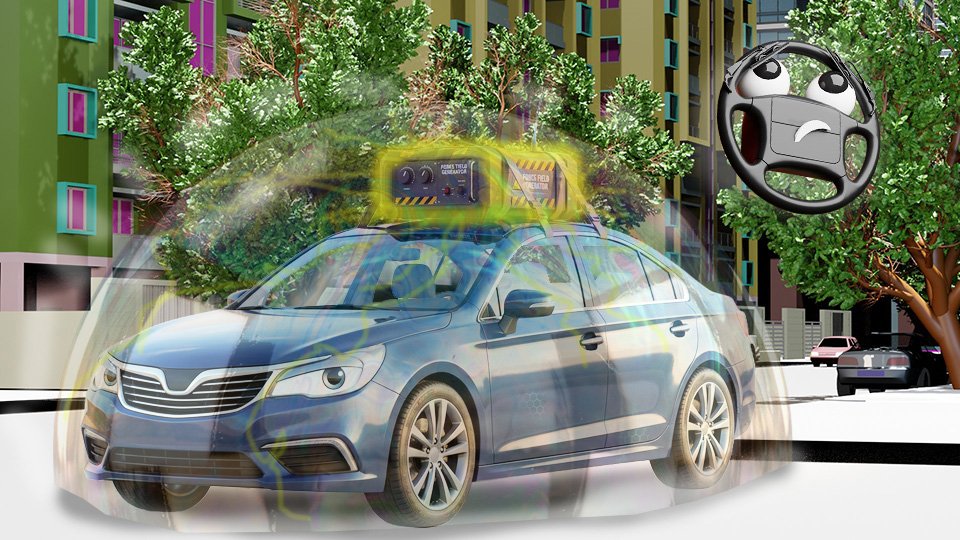
Armando took a defensive driving course once, decades ago, for a ticket he’d rather not get into — and walked away with almost nothing except a vague sense that he was supposed to be “more aware” out there. Aware of what, exactly, nobody ever quite spelled out. Turns out it’s not a vibe, it’s five specific habits, and every one of them is something you could start doing on your very next drive.
👁️ Look Farther Ahead Than Feels Natural
Most drivers fixate on the bumper of the car directly in front of them — which feels responsible, but actually leaves you reacting to trouble at the last possible second, since that’s the only moment you can see it coming.
The fix is to deliberately lift your eyes farther up the road — roughly 12 to 15 seconds ahead of where you are right now, which at typical speeds works out to about a city block. That doesn’t mean ignoring the car in front of you; it means also tracking brake lights two or three cars up, a light about to change, someone stepped off a curb. That extra warning time is what turns a sudden slam-the-brakes moment into a smooth, unremarkable slow-down — the kind of near-miss you never even clock as one.
🔄 Check Your Mirrors on a Schedule, Not Just Before You Need To
Most people only glance in the mirror right before a lane change — which is exactly the moment you’re too busy to actually process what you’re seeing. The better habit is checking every five to eight seconds as a running background task, whether you’re about to move or not.
Think of it like keeping a mental map that’s always roughly up to date, instead of taking a single snapshot right when you need to make a decision. When you build that picture continuously, a car in your blind spot or a gap opening up in the next lane is never a surprise — it’s just an update to something you were already tracking.
🤝 Keep a Running “What If” in the Back of Your Mind
This is really the whole philosophy of defensive driving, boiled down to one habit: constantly asking yourself a quiet, low-key question. What if that car up ahead turns without signaling? What if that pedestrian on the corner steps off the curb before the light changes? What if the car in front of you brakes hard, right now, for no reason you can see yet?
This isn’t about driving scared or expecting disaster around every corner — it’s about always having an escape option already in mind, so if one of those “what ifs” actually happens, you’re not inventing a plan from scratch under pressure. You’re just executing one you’d already half-made.
🚦 Never Assume the Other Driver Has Actually Seen You
A green light or the right-of-way tells you what’s supposed to happen — it doesn’t guarantee the other driver has seen you, is paying attention, or is going to do what the rules say they should. People run lights, misjudge gaps, and pull out while looking at their phone instead of you.
A half-second of hesitation before you proceed — confirming that the other car is actually, genuinely slowing down and not just probably going to — costs you nothing. It’s the cheapest insurance available to you behind the wheel.
🎯 The Real Resource You’re Managing Is Space
Every habit above is really the same idea wearing a different hat: buying yourself space and time to react before a problem becomes unavoidable. Looking farther ahead buys you time. Checking mirrors on a schedule buys you awareness. Keeping a “what if” in mind buys you a plan. Following distance, lane position, and matching your speed to conditions all buy you the same thing — room.
None of these habits require new reflexes or a faster car. They just mean spending your attention a little differently — farther out, more often, and slightly ahead of whatever actually happens.
🛠️ Gear Worth Having
REXING M2 Smart Mirror Dash Cam — built-in blind spot detection adds a genuine extra set of eyes to the mirror-check habit.
Utopicar Blind Spot Convex Mirror — a simple, inexpensive stick-on mirror that shrinks your blind spot with zero installation skill required.
XOOL Emergency Warning Triangle Kit — defensive driving includes what happens after an incident — staying visible to other traffic if you’re ever stopped roadside.
As an Amazon affiliate, I earn from qualifying purchases. Thank you for supporting GrumblePark.
🔗 Related Reads
- Following Distance: Why the Old Rules Don’t Account for Modern Speeds
- Merging on the Highway: The Physics of Doing It Right
- How to Drive Safely in Fog, Heavy Rain, and Low Visibility
GrumblePark is part of the WhistleBump Group — find the rest of the family at WhistleBump.com.
44001
©2026 John D Reinhart/GrumblePark.com — All rights reserved