Defensive Driving Fundamentals That Actually Matter

Defensive driving isn’t a class you took once. It’s a handful of habits that actually change your odds on the road.

Armando took a defensive driving course once, decades ago, for a ticket he’d rather not get into — and walked away with almost nothing except a vague sense that he was supposed to be “more aware” out there. Aware of what, exactly, nobody ever quite spelled out. Turns out it’s not a vibe, it’s five specific habits, and every one of them is something you could start doing on your very next drive.

👁️ Look Farther Ahead Than Feels Natural

Most drivers fixate on the bumper of the car directly in front of them — which feels responsible, but actually leaves you reacting to trouble at the last possible second, since that’s the only moment you can see it coming.

The fix is to deliberately lift your eyes farther up the road — roughly 12 to 15 seconds ahead of where you are right now, which at typical speeds works out to about a city block. That doesn’t mean ignoring the car in front of you; it means also tracking brake lights two or three cars up, a light about to change, someone stepped off a curb. That extra warning time is what turns a sudden slam-the-brakes moment into a smooth, unremarkable slow-down — the kind of near-miss you never even clock as one.

🔄 Check Your Mirrors on a Schedule, Not Just Before You Need To

Most people only glance in the mirror right before a lane change — which is exactly the moment you’re too busy to actually process what you’re seeing. The better habit is checking every five to eight seconds as a running background task, whether you’re about to move or not.

Think of it like keeping a mental map that’s always roughly up to date, instead of taking a single snapshot right when you need to make a decision. When you build that picture continuously, a car in your blind spot or a gap opening up in the next lane is never a surprise — it’s just an update to something you were already tracking.

🤝 Keep a Running “What If” in the Back of Your Mind

This is really the whole philosophy of defensive driving, boiled down to one habit: constantly asking yourself a quiet, low-key question. What if that car up ahead turns without signaling? What if that pedestrian on the corner steps off the curb before the light changes? What if the car in front of you brakes hard, right now, for no reason you can see yet?

This isn’t about driving scared or expecting disaster around every corner — it’s about always having an escape option already in mind, so if one of those “what ifs” actually happens, you’re not inventing a plan from scratch under pressure. You’re just executing one you’d already half-made.

🚦 Never Assume the Other Driver Has Actually Seen You

A green light or the right-of-way tells you what’s supposed to happen — it doesn’t guarantee the other driver has seen you, is paying attention, or is going to do what the rules say they should. People run lights, misjudge gaps, and pull out while looking at their phone instead of you.

A half-second of hesitation before you proceed — confirming that the other car is actually, genuinely slowing down and not just probably going to — costs you nothing. It’s the cheapest insurance available to you behind the wheel.

🎯 The Real Resource You’re Managing Is Space

Every habit above is really the same idea wearing a different hat: buying yourself space and time to react before a problem becomes unavoidable. Looking farther ahead buys you time. Checking mirrors on a schedule buys you awareness. Keeping a “what if” in mind buys you a plan. Following distance, lane position, and matching your speed to conditions all buy you the same thing — room.

None of these habits require new reflexes or a faster car. They just mean spending your attention a little differently — farther out, more often, and slightly ahead of whatever actually happens.

🛠️ Gear Worth Having

REXING M2 Smart Mirror Dash Cam — built-in blind spot detection adds a genuine extra set of eyes to the mirror-check habit.

Utopicar Blind Spot Convex Mirror — a simple, inexpensive stick-on mirror that shrinks your blind spot with zero installation skill required.

XOOL Emergency Warning Triangle Kit — defensive driving includes what happens after an incident — staying visible to other traffic if you’re ever stopped roadside.

As an Amazon affiliate, I earn from qualifying purchases. Thank you for supporting GrumblePark.

🔗 Related Reads


GrumblePark is part of the WhistleBump Group — find the rest of the family at WhistleBump.com.

44001

©2026 John D Reinhart/GrumblePark.com — All rights reserved
Following Distance: Why the Old Rules Don’t Account for Modern Speeds

The old three-second rule was built for a slower, simpler kind of driving. Here’s what actually determines safe following distance today.

Every driver’s ed instructor in America seems to have learned the exact same eleven words: “count three seconds between you and the car ahead.” It’s tidy, it’s easy to remember, and it’s barely changed since long before anyone had a phone mounted on their dashboard. Chances are you learned it the same way — pick a fixed point, start counting, and if the car ahead beats you to it, back off.

It’s a good rule. It’s just not the whole rule — because “three seconds” at 25 mph in a school zone and “three seconds” at 75 mph on the interstate are not remotely the same amount of actual safety. Here’s what’s really going on, and what to do about it.

⏱️ How the Three-Second Rule Actually Works

Pick something fixed and easy to spot up ahead — a road sign, an overpass, even a particularly ugly pothole. The instant the car in front of you passes it, start counting: “one-Mississippi, two-Mississippi, three-Mississippi.” If you reach that same spot before you finish counting, you’re following too closely. Three full seconds is the traditional floor for a safe gap — not a target to aim for, a minimum not to dip below.

🧠 Why “Stopping” Takes Longer Than It Feels Like It Should

Here’s the part the three-second rule glosses over: “stopping distance” isn’t one thing, it’s two things stacked together.

First there’s reaction time — the gap between your eyes noticing brake lights ahead and your foot actually landing on the brake pedal. Even a fully alert, undistracted driver needs close to a full second for that. You’re not doing anything wrong in that second; that’s just how fast a human nervous system works.

Then there’s braking distance — the distance the car itself travels once the brakes are actually engaged, tires gripping, everything working the way it should. This is where speed stops playing fair.

Braking distance doesn’t grow at the same rate your speed does — it grows much faster, because the energy your brakes have to fight scales with the square of your speed, not with your speed itself. Practically, that means doubling your speed doesn’t just double how far it takes you to stop — it can roughly quadruple it.

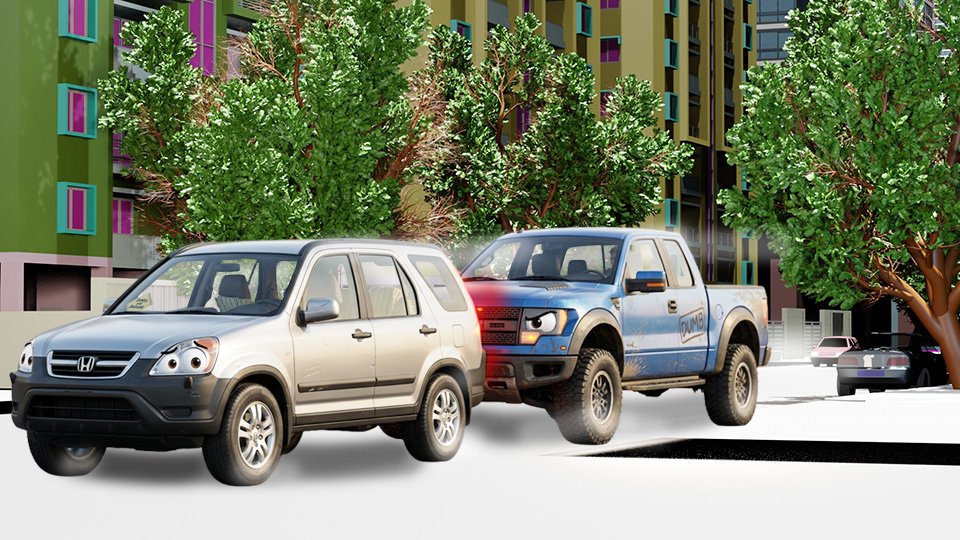
Which is exactly why the flat three-second count starts working against you at higher speeds. Three seconds at 30 mph covers around 130 feet — comfortably more room than you actually need to stop.

Three seconds at 75 mph covers over 330 feet, but your real stopping distance at that speed has grown so much faster than your speed did that the same three-second gap now leaves you with a lot less breathing room than it felt like it should.

🌧️ Why Rain, Snow, and Fog Change the Number — Not Just the Speed

All of that math above assumes dry pavement and tires with good grip on the road. Take either of those away and the equation changes fast.

Wet roads mean less friction between your tires and the pavement, so braking distance stretches out — some safety organizations recommend doubling your following distance in rain.

Snow and ice go further still, with some recommending tripling it, because at that point your tires are fighting for grip on a surface that barely wants to give them any.

Fog is its own problem entirely: it doesn’t change your braking physics at all, it just shrinks how much warning you get before you need to react in the first place, so more distance buys you more time to notice trouble developing.

🚛 Why Big Vehicles Need Extra Room — Not Just Extra Respect

Riding close behind a truck, bus, or RV feels intimidating for good reason, but the real issue isn’t just nerves — it’s two genuine visibility problems happening at once.

First, you lose your own view of the road. A large vehicle blocks your sightline to whatever’s happening two or three cars ahead — brake lights, a sudden lane change, debris in the road — so you end up reacting to the truck’s brake lights instead of the actual situation, which costs you precious reaction time.

Second, if you’re riding in that stretch directly behind a truck’s rear bumper, there’s a real chance you’re sitting in the driver’s blind spot — close enough that their mirrors simply can’t see you’re there. A rough gut check: if you can’t see the truck driver’s side mirrors, assume they can’t see you either.

✅ A Better Mental Model Than One Fixed Number

Instead of treating “three seconds” as a rule you either follow or don’t, it’s more useful to treat it as a floor that moves depending on conditions.

Start at three seconds in good conditions on a dry road.

Add more as your speed climbs.

Add more again for rain, snow, fog, or anything else eating into your visibility or your tires’ grip.

And add more still behind anything bigger than your own car.

None of that requires new math while you’re driving — it just means treating “three seconds” as where the buffer starts, not where it ends.

🛠️ Gear Worth Having

REXING M2 Smart Mirror Dash Cam — documents your actual following distance and any incident objectively, which matters if a tailgating collision ever turns into a dispute.

ACCUTIRE Digital Tire Gauge — correct tire pressure is part of the real stopping-distance equation, not just a following-distance afterthought.

Rain-X Latitude Water Repellent Wiper Blades — better visibility in rain means more warning time, which is exactly what a longer following distance is trying to buy you — and it’s a simple, tool-free install.

As an Amazon affiliate, I earn from qualifying purchases. Thank you for supporting GrumblePark.

🔗 Related Reads


GrumblePark is part of the WhistleBump Group — find the rest of the family at WhistleBump.com.

44008

©2026 John D Reinhart/GrumblePark.com — All rights reserved
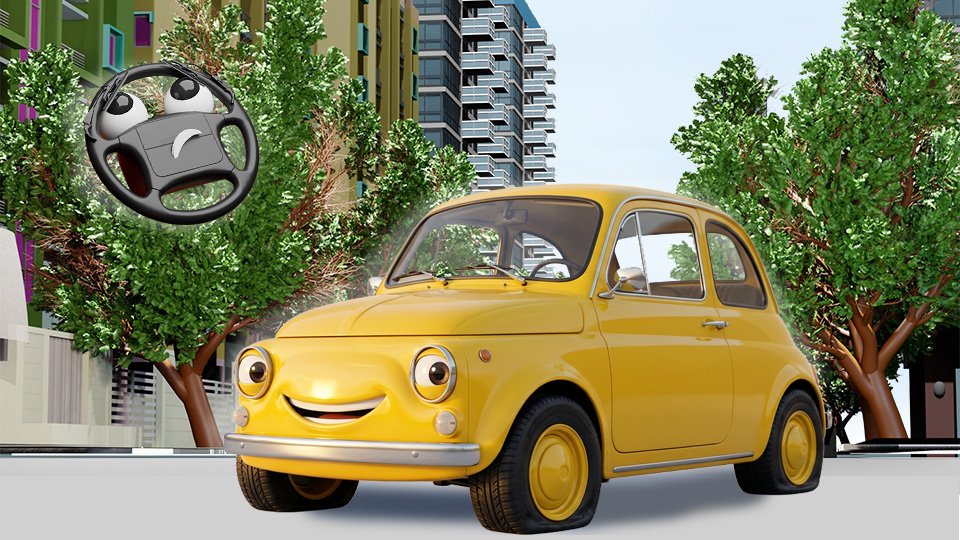
Tire Pressure and Handling: Why It’s Not Just About the Tires

Tire pressure isn’t just a maintenance number. It quietly rewrites how your car actually handles.

Amanda has always thought about tire pressure strictly as a wear-and-tear issue — just another number that she’s supposed to pay attention to. How much oil does it have? How much cooling stuff in the radiator? How much air in the tires? Just numbers.

The surprise is that those numbers all affect the operation of the car. In the tire’s case, it can seriously affect how well the car handles. And that, my friend, becomes a safety issue.

🏎️ The Contact Patch Is the Whole Story

Your car is not a light piece of machinery. It can weigh anywhere from three thousand pounds up to three tons, depending upon what it is.

That entire weight rests on the four rubber tires. They’re actually tubes that fit around your wheels, pumped up with air to absorb bumps in the road and give the wheels something with which to grip the road. The tires form the connection between your car above and the roadway below.

Every single thing a tire does — gripping in a straight line, braking, cornering — comes down to one small patch of rubber, roughly the size of your hand, actually touching the road at any given moment.

It’s a patch of rubber doing the same basic job everywhere on the tire, and that job is simply staying pressed flat and even against the road. When you turn a corner, the car’s weight shifts and leans onto the outer edge of the tire for that moment, so the edges do pick up more of the work then — but the second you straighten out, the load spreads back evenly across the whole tire again.

Stretch your hand as wide as you can. Now press it against a table. Which part touches first? That’s exactly like an overinflated tire: the center touches first.

Since the center of the tire is going the work of gripping the road, the edges barely get invited to the party.

Now cup your hand and put it on the table. That’s what underinflation looks like – it still holds the tire shape, but the center has no pressure on it.

🛑 Braking Distance Changes With Pressure

When you step on the brakes, the braking system hydraulically presses brake pads against the car’s wheel to slow it down. But the system relies on the tire’s connection to the road to actually stop the car.

A normally inflated tire is designed to handle the braking function with precision. The air cushion inside provides a rigid structure that helps the car stop correctly.

An underinflated, sagging tire allows a measurable degree of flex that counteracts the efficiency of the braking system. Although the car will stop, the flexing generates heat that reduces the life of the tire and can significantly increase the amount of distance the car needs to fully stop.

Conversely, an overinflated tire sitting high on the crown in the center doesn’t have much surface area to stop the car. That high center heats up, degrading the tire’s lifespan, and, because it doesn’t have as much tread as the whole tire, wants to skip and skid over the road until the car stops. Not safe.

↩️ Cornering Response Changes Too

Dashing around a corner with a set of properly inflated tires is a thing of joy. The car goes exactly where you point it, smoothly and speedily, no questions asked.

Tires that don’t have enough air? That’s another story. Because they sag, the tires allow the car to lean out beyond the contact patch just a little bit. The result is an unsatisfying, mushy control of the car. And that mushy control – you turn the wheel and the flexing tires put up a fight and a delay, could be a real safety issue in some circumstances.

Tires with too much air? Get ready for a harsh and bumpy ride, my friend. Now the tires are riding only on their centers – a contact patch that is smaller than what the car designer had in mind. Every bump comes through the steering wheel, and the car feels like it wants to skitter dart away on its own.

It’s all, and always, about safely controlling the car, isn’t it? You want the car to follow where you point it without question. A moment’s delay, a slight swerve, this way or that, could cause you a real problem in certain traffic situations.

🌡️ Why This Changes With the Seasons

In the hot summertime, your tires might show just a tick more pressure than what’s required. That small degree of overinflation is usually not enough to affect the car’s handling or braking.

But, sustained wintry conditions can cause the moisture in the air in the tires to condense. That condensation reduces the air’s pressure, dropping the the amount of inflation. The drop in inflation can actually affect the tire’s performance, and therefore the car’s handling.

It’s worth checking the pressure every now and then, regardless of the season. Just take a quick tire check every week or so. You’ll feel better knowing what’s going on down there.

⚖️ The Number That Actually Matters

But, how much is the right pressure? Excellent question!

You could just shoot air into it until it looks right. That’s not the wisest solution, as a few pounds above or below the correct inflation pressure could seriously affect the tire’s performance.

You could look on the side of the tire for something labeled PSI (per square inch). DON’T USE THAT NUMBER! That’s the maximum amount of air the tire will handle! Using that PSI will seriously OVERINFLATE the tire!

Believe it or not, the correct pressure printed on a placard inside the door jamb. Open the driver’s door and there it will be, along with some other vital information. That placard was put there before the car left the factory, so you know it’s right.

That, and only that, is the correct pressure for your tires.

🛠️ Gear Worth Having

ACCUTIRE Digital Tire Gauge — quick, accurate checks make it easy to stay at spec rather than guessing by eye.

JACO ElitePro Tire Pressure Gauge — a durable, precise second option for anyone who wants a gauge that lasts years.

DEWALT 20V MAX Tire Inflator — correcting a low reading immediately, in the driveway, rather than hoping it holds until the next gas station.

As an Amazon affiliate, I earn from qualifying purchases. Thank you for supporting GrumblePark.

🔗 Related Reads

GrumblePark is part of the WhistleBump Group — find the rest of the family at WhistleBump.com.

44006

©2026 John D Reinhart/GrumblePark.com — All rights reserved
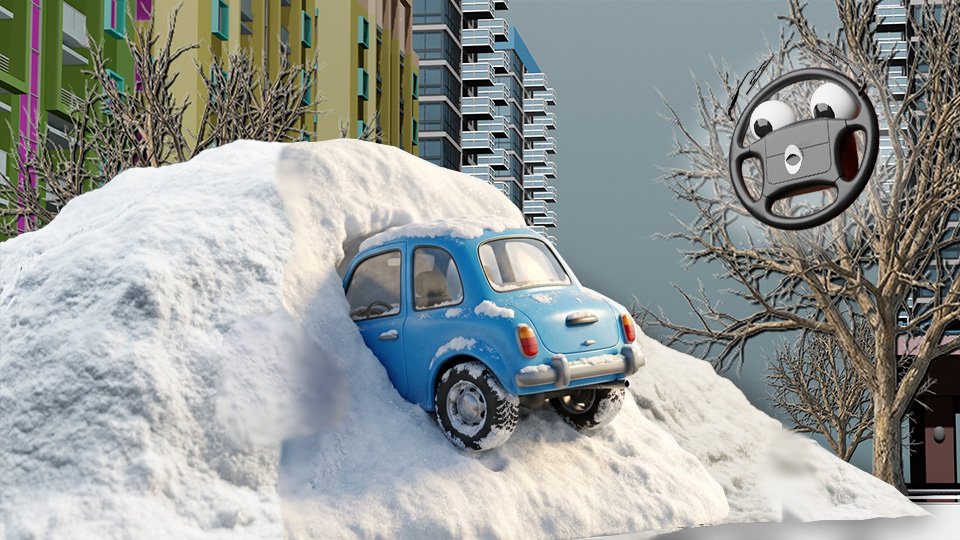
Winter Driving: Understanding Traction Before You Need It

Winter driving skill is really just traction awareness. Here’s what’s actually happening between your tires and the road — and what to actually do about it.

Amanda grew up somewhere that saw snow twice a decade and moved somewhere that sees it constantly, and has spent every winter since white-knuckling her way through a skill she never actually learned, just sort of absorbed under duress in real time.

Exactly the way you’d learn to swim by being tossed in the deep end, except the deep end is a highway on-ramp.

🧊 What Traction Actually Is

Here’s the whole concept, no jargon required: traction is just grip — the same idea as the difference between walking confidently across a dry sidewalk and shuffling carefully across a wet one in slippery-soled shoes.

Your tires are doing that same job, all the time, gripping the road so that turning the wheel, pressing the brake, or pressing the gas actually translates into the car doing what you asked.

Snow, ice, and even a thin film of water all make the road slipperier under your tires, the exact same way a wet floor makes it slipperier under your shoes — less grip means the car responds less reliably, and sometimes not at all, to the same inputs that work perfectly on a dry day.

🔷 Black Ice: The One You Can’t See Coming

Black ice is the genuinely sneaky one, and worth taking seriously precisely because it doesn’t look dangerous at all.

Black ice is a thin, transparent layer of ice that looks exactly like ordinary wet pavement — no visual warning, no obvious sheen, nothing that would make you ease off the gas the way you naturally would for visible snow or slush.

It tends to show up first in specific, predictable spots: shaded areas that don’t get direct sun, bridges and overpasses (which cool down faster than the open road beneath them, since cold air can reach both the top and bottom of a bridge deck), and during the very early morning or evening when temperatures are dropping or haven’t warmed up yet.

If you’re driving somewhere cold and you cross a bridge or come out of a shaded patch, that’s genuinely worth a small, deliberate mental note — not panic, just quiet extra caution for the next few seconds.

🚗 Smooth Inputs Are the Whole Skill

If there’s one single idea worth actually remembering from this whole post, it’s this one.

Picture carrying a completely full cup of coffee across a room without spilling a drop — you don’t jerk your arm around, you move it smoothly and gradually, because any sudden motion sloshes the coffee right out.

Your tires’ grip on a slippery road works almost exactly the same way. A sudden, sharp turn of the wheel, a hard stomp on the brake, or flooring the gas pedal are all the driving equivalent of jerking that coffee cup — on dry pavement your tires have enough grip to absorb it, but on snow or ice, that same sudden input is far more likely to break the tires loose from the road entirely.

Winter driving skill isn’t some separate, advanced technique — it’s genuinely just turning, braking, and accelerating more gradually than instinct tells you to, every single time.

🔢 Why Slowing Down Isn’t Just About Stopping Distance

Stopping distance on ice or snow can be several times longer than on dry pavement — meaning a stop that would normally take you the length of a couple of car lengths might now take the length of a whole city block.

But there’s a second, quieter benefit to driving slower that’s just as important: speed itself eats up your reaction time.

Going slower means more literal seconds between spotting a problem ahead and needing to actually respond to it — which matters just as much as shorter stopping distance, especially on a road where visibility and traction are both already working against you.

🛡️ All-Wheel Drive Helps You Go, Not Stop

This is one of the most common, genuinely understandable misconceptions out there, and it’s worth clearing up plainly: all-wheel drive helps put power down to all four tires at once when you’re accelerating from a stop, which is exactly why an AWD car can pull confidently out of a snowy parking spot that leaves a two-wheel-drive car spinning helplessly in place.

But braking and steering don’t work through that same system at all — when you press the brake pedal, every car, AWD or not, is relying on the same four tires gripping the same slippery road to actually slow down.

An AWD vehicle that got moving impressively well on snow can still take exactly as long to stop as a plain two-wheel-drive car on that same surface. AWD gets you unstuck. It does not, on its own, get you stopped.

🎯 The Phrase Worth Carrying Into Every Winter Drive

Everything above is worth knowing, but on an actual icy morning, with your hands already on the wheel, you don’t need a lecture — you need something short enough to just repeat to yourself. Here’s the one:

Slow Hands, Slow Feet.

Slow hands means every steering input stays gentle and gradual — no sudden corrections, even if something startles you.

Slow feet means the same discipline applies to both pedals — easing onto the brake and gas rather than stabbing at either one. Four words, covering the entire actual skill this post is built around.

If the road looks even a little suspicious — a shaded patch, a bridge, a morning that hasn’t warmed up yet — slow hands, slow feet is the whole plan, no diagnosis required first.

🛠️ Gear Worth Having

AutoSock Textile Snow Socks — a compact, glovebox-friendly traction option — they slip over the tire, no jack or tools required, genuinely easy even in a parking lot mid-storm.

XOOL Emergency Warning Triangle Kit — winter conditions raise the odds of needing to be visible roadside — worth keeping in the trunk all season.

ACCUTIRE Digital Tire Gauge — cold weather drops tire pressure, and correct pressure is part of the traction equation too.

As an Amazon affiliate, I earn from qualifying purchases. Thank you for supporting GrumblePark.

🔗 Related Reads


GrumblePark is part of the WhistleBump Group — find the rest of the family at WhistleBump.com.

44004

©2026 John D Reinhart/GrumblePark.com — All rights reserved
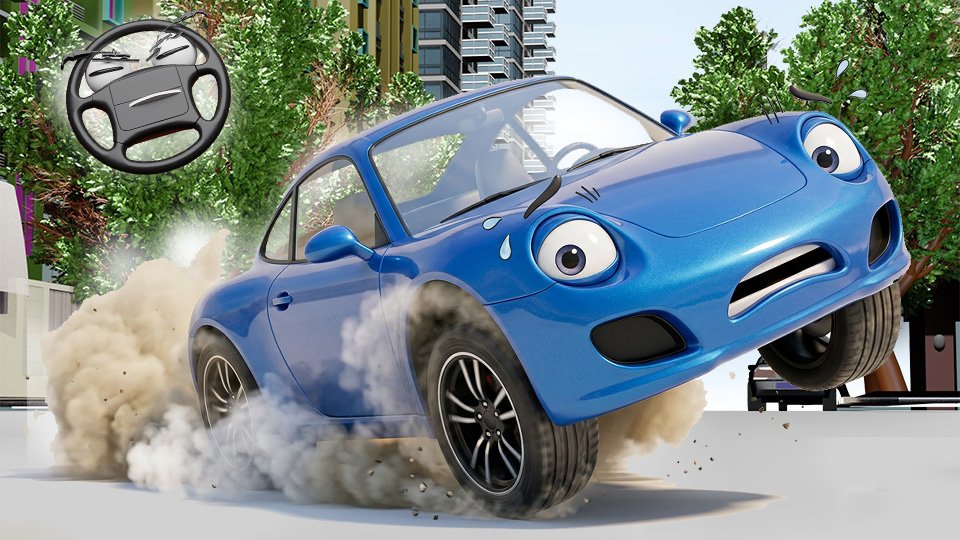
How to Drive Safely in Fog, Heavy Rain, and Low Visibility

Low visibility driving isn’t just ‘the same driving, but harder to see’ — high beams, hydroplaning, and following distance all work differently than you’d think. Here’s what actually changes.

Armando’s instinct in fog, for years, was to switch on his brightest lights — high beams, on the logic that more light must mean more visibility. It’s exactly backwards, and it’s one of the more common low-visibility mistakes out there.

💡 Why High Beams Make Fog Worse

Fog is made of tiny water droplets that scatter light, like a gazillion little crystals.

High beams aimed up and out reflect straight back off that droplet layer, creating a bright wall of glare that actually reduces what you can see.

Low beams, aimed down and closer to the road, scatter far less and give a genuinely clearer picture of what’s directly ahead.

🌧️ Hydroplaning: What’s Actually Happening

Hydroplaning is a term you may hear in the news – this fellow hydroplaned and crashed into a tree.

Hydroplaning occurs when a layer of water builds up under your tires faster than the treads can channel it away. It can actually lift your tires off the road surface onto a thin film of water — losing contact and, with it, all steering and braking control momentarily. You can feel the steering wheel briefly go slack as it loses contact with the road.

It’s much more likely at higher speeds, with worn tread, and in standing water rather than a light, even rain.

If there’s a big puddle stretching across the road? SLOW DOWN before you get to it.

🚗 If You Do Hydroplane

Ease off the accelerator smoothly, keep the steering wheel straight, and avoid braking or turning sharply until you feel the tires regain contact. It only lasts a second.

Making sudden inputs while the tires are essentially floating can send you off in the wrong direction when the tires reconnect with the road.

It only lasts a second – the friction with the water slows the car down enough for the water under the treads to squirt away.

👥 Follow Lane Markings, Not Taillights

In genuinely thick fog, following another car’s taillights closely feels reassuring but is actually risky — you’re now following distance dictated by someone whose own visibility and reaction time you can’t see or control.

The painted lane line and the edge of your own low beams are the more reliable reference.

It doesn’t hurt to follow someone’s taillights ahead of you, but allow plenty of space for sudden changes, and keep your eyes on the lane markings.

📡 What About Adaptive Cruise Control?

Adaptive cruise control (the version that uses radar to automatically slow down and speed back up based on the car ahead of you, rather than holding one fixed speed) can feel like a reasonable workaround in fog, since radar genuinely does pass through fog far better than your own eyes do. It’s tempting to think: the radar can “see,” so it’s got this handled.

It doesn’t, and it’s worth knowing exactly why. First, in practice: manufacturers themselves generally advise against relying on it in heavy fog or rain, since moisture and road spray can still coat the sensor and quietly degrade how well it’s actually working — a lot of systems also lean on a camera alongside the radar, and a camera is exactly as blind in fog as you are.

But even a radar system working perfectly only ever manages one thing: your distance to the specific car directly in front of you. It has no idea what’s stopped, stalled, or crashed further up the road, especially around a curve or over a rise — nothing can see around a corner, radar included. Following distance to one tracked car was never the actual risk fog creates. The risk is everything beyond what you can personally see, and radar doesn’t extend that.

That’s exactly the mechanism behind the multi-vehicle pileups you sometimes hear about in dense fog: drivers keeping a safe gap to the car right in front of them, at a speed faster than their own visibility actually allowed, until something stopped further ahead that nobody — human or radar — caught in time. The standard advice is blunt for a reason: turn cruise control off entirely in fog, adaptive or not, and drive at a speed matched to how far you can actually see, not to how well you’re tracking the car ahead.

🛑 Knowing When to Just Stop

If visibility drops to the point where you genuinely can’t see the road ahead reliably, pulling completely off the roadway and waiting it out is a legitimate, sometimes the only safe, option.

Don’t just slow down and crawl along the shoulder. There you’re still a hazard to other traffic. Off. The. Road. And turn off your lights, lest someone following you thinks you’re still on the road!

🛠️ Gear Worth Having

Rain-X Latitude Water Repellent Wiper Blades — the water-repelling treatment genuinely improves windshield clarity beyond what a standard wiper alone provides.

Bosch ICON Wiper Blades — a premium beam-style blade built to hold firm contact with the glass even at higher speeds in heavy rain.

REXING M2 Smart Mirror Dash Cam — night vision and WDR help maintain a recorded, objective view even when your own eyes are working overtime.

As an Amazon affiliate, I earn from qualifying purchases. Thank you for supporting GrumblePark.

🔗 Related Reads


GrumblePark is part of the WhistleBump group – find the rest of the family at WhistleBump.com.

44009

©2026 John D Reinhart/GrumblePark.com — All rights reserved