
How to Read a Tire’s Sidewall

Those cryptic numbers stamped on your tire aren’t decoration — here’s what they actually tell you.

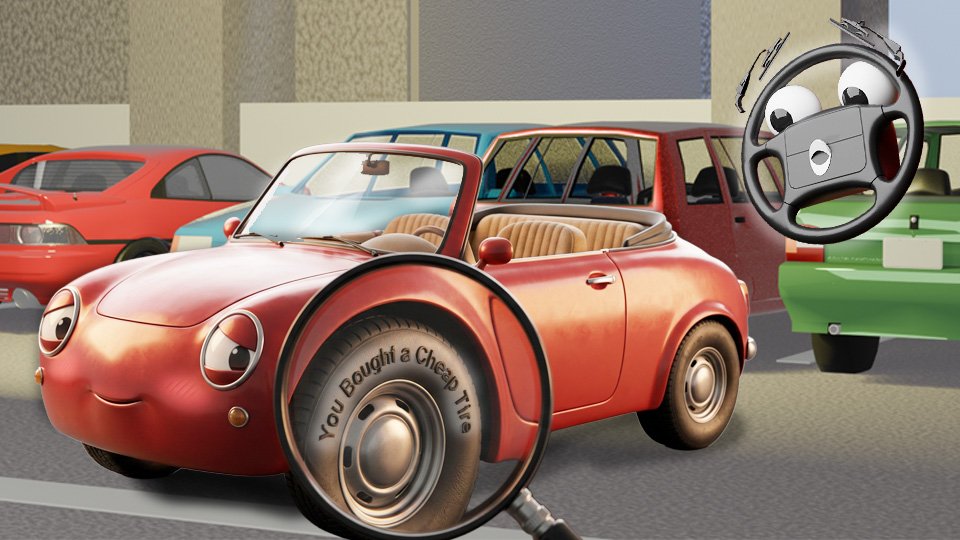
Armando has owned his car for four years and has crouched next to this exact tire dozens of times, and every single time his eyes land on “P215/65R16 95H” and slide right off it like it’s written in a language his car speaks but he doesn’t. It’s embossed permanently into the rubber, which means somebody at some point decided this information was important enough to be there forever. Nobody ever told him what it meant. That’s a gap, not a character flaw, and it’s a fixable one in about four minutes.

If you’ve ever looked at your own tire and felt the same low hum of “this is clearly a code and I am clearly not the one it was written for,” you’re in good company. Let’s break it.

Draw the curtains while you read this – make sure nobody sees you. Eat this page when you’re done. This stuff must be top secret:

🔍 The Tire, Introduced (Since Nobody Ever Actually Does This)

Before diving into the alphabet soup on the side of your tire, it helps to know what you’re actually looking at, because “tire” is doing a lot of work covering several different parts most people have never bothered to name.

  • The tread is the thick, grooved part actually touching the road — those grooves aren’t decoration, they’re channels for water and grip to escape through.
  • The sidewall is the tall, smooth-ish vertical wall running up from the road to the wheel — and it’s also, conveniently, the exact spot where all those size codes and ratings live, which is why we’re here.
  • The shoulder is where the tread curves over into the sidewall, and it’s the part that quietly does extra work every time you take a corner, since that’s where the tire’s weight shifts under a turn.
  • And way down at the very bottom edge, where the tire clamps onto the metal wheel and holds the air in, is the bead — not glamorous, but doing the unglamorous job of keeping the whole thing sealed shut.

One more thing worth clearing up while we’re here: the black rubber part is the tire. The silver or painted metal part it’s mounted on is the wheel. People use the two words interchangeably all the time, and now you officially don’t have to.

🔤 P215/65R16: The Size Code, Decoded

Each character in this string is doing a specific job:

P215/65R16

P = the tire’s class (“P” for passenger vehicle; you’ll also see “LT” for light truck, which means a heavier-duty tire built for towing and hauling).

215 = the tire’s width in millimeters, measured sidewall to sidewall at the widest point.

65 = the aspect ratio — the sidewall’s height expressed as a percentage of the width. The 65 means the sidewall is 65% as tall as the tire is wide – it’s pretty much a standard size. A lower number, say, 35, means a shorter, stiffer sidewall, great for cornering but super bumpy on rough road; a higher number means a taller tire, offering a more cushioned ride.

R = radial construction, meaning the internal fabric plies run radially (perpendicular to the direction of travel) rather than diagonally. Nearly every tire made today is radial; you’re unlikely to see anything else, but the letter’s still there.

16 = the wheel diameter, in inches, that the tire is built to fit. This one’s non-negotiable — it has to match your wheel exactly.

⚖️ 95H: Load Index and Speed Rating

The two characters right after the size code are a second code, and they matter just as much as the first:

95 = the load index, a number that corresponds to a maximum weight the tire can safely carry, per a standardized industry chart (95 works out to 1,521 pounds per tire, for context — the chart is easy to find with a quick search if you want your exact number).

H = the speed rating, the maximum sustained speed the tire is rated to handle under load. It’s an engineering ceiling, not a suggestion, and not a challenge, no matter what the number tempts you to do on an empty highway at 6 a.m.

📅 DOT XXXX: The Birth Certificate

Somewhere else on the sidewall you’ll find a code starting with “DOT,” ending in four digits — the last four are the important ones. The first two are the week of manufacture, the last two are the year. “2324” means the 23rd week of 2024.

This matters because rubber ages even when it’s just sitting there doing nothing, the way a rubber band left in a junk drawer eventually turns brittle. Most manufacturers recommend replacing tires after six to ten years regardless of remaining tread — a tire can look fine and still be past its structural prime.

🧭 The Tire Store: Why None of This Is Trivia

This isn’t a party-trick decoder ring.

When you go to buy a new tire, take a picture of the sidewall numbers into the store with you .

You will have the exact information you need to buy a matching replacement tire. Here’s why it matters:

  • Mismatched sizes can throw off your speedometer
  • Mismatched sizes can stress the drivetrain on an all-wheel-drive vehicle
  • Under-rated tires can’t legally handle your vehicle’s weight
  • And, a perfectly good-looking tire could quietly be sitting there, looking good long past its expiration date.

AND: the next time you’re standing next to your own tire, you’ll know exactly what it’s telling you.

🛠️ Gear Worth Having

Accutire Digital Tire Gauge — a lit display makes checking the pressure that goes with all that sidewall math painless, even in a dim driveway.

JACO ElitePro Tire Pressure Gauge — a steel-braided hose and brass internals for anyone who wants a gauge that outlasts the car.

GODESON Digital Tire Tread Depth Gauge — since you’re already crouched down reading the sidewall, might as well check the tread while you’re there.

As an Amazon affiliate, I earn from qualifying purchases. Thank you for supporting GrumblePark.

🔗 Related Reads

  • The Penny Test and What Tread Depth Actually Means
  • How to Check for Alignment Problems Without a Shop Visit
  • How to Choose the Right Tires for Your Driving

GrumblePark is part of the WhistleBump group – find the rest of the family at WhistleBump.com.

46001

©2026 John D Reinhart/GrumblePark.com — All rights reserved

Reading Uneven Wear Patterns (What Your Tires Are Telling You)

Your tires are trying to tell you something. Here’s how to read the message before it gets expensive.

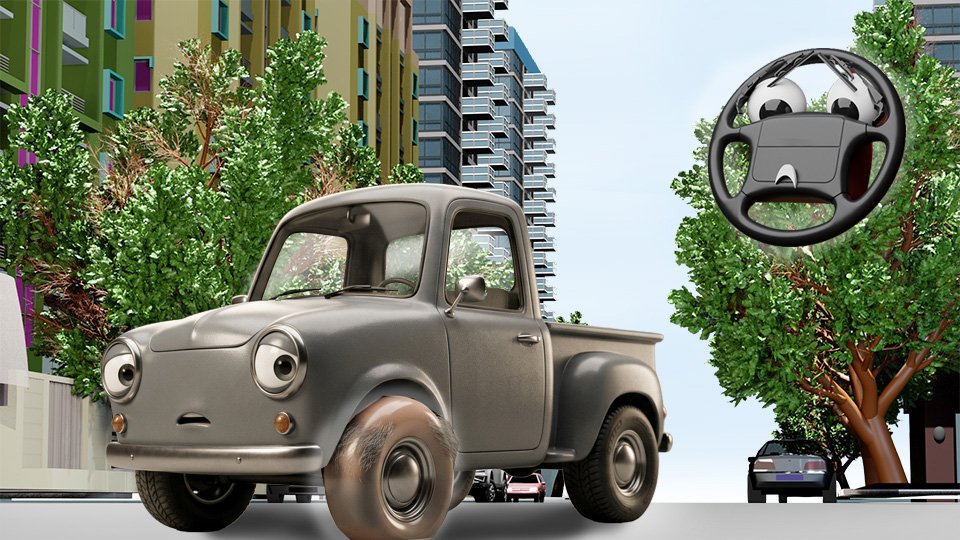
Armando runs a hand across a tire at a gas station one afternoon and notices the outside edge is noticeably balder than the inside — the exact moment he realizes his car has been quietly narcing on his maintenance habits to anyone who bothers to check.

Because it has. Tires wear in specific, readable patterns, and each one points at a specific cause. Here’s the decoder — no tools required, just your hand and a couple minutes.

🛞 How Your Tires Actually Work

Every single thing a tire does — gripping in a straight line, braking, cornering — comes down to one small patch of rubber, roughly the size of your hand, actually touching the road at any given moment.

There’s no separate section built exclusively for “going straight” and another built exclusively for “turning.” It’s the same rubber doing the same basic job everywhere on the tire, and that job is simply staying pressed flat and even against the road. When you turn a corner, the car’s weight shifts and leans onto the outer edge of the tire for that moment, so the edges do pick up more of the work then — but the second you straighten out, the load spreads back evenly across the whole tire again.

That’s exactly why proper inflation matters, and exactly why your tire’s wear pattern is basically a diary of how it’s actually been treated. Correct pressure keeps that whole contact patch flat against the road, sharing the workload evenly the way it’s supposed to. Too much or too little air throws that balance off — pushing more weight onto the center or the edges than they were ever meant to carry — and every mile you drive on it wears exactly the part carrying the extra load. Nothing about that tire is lying to you. It’s just showing you, in rubber, precisely where the weight’s actually been sitting.

🎯 Center Wear = Overinflation

If the middle strip of tread is noticeably more worn than both edges, the tire’s been over-inflated: running with too much air.

Stretch your hand as wide as you can. Now press it against a table. Which part touches first? That’s exactly like an overinflated tire: the center touches first.

Since the center of the tire is going the work of gripping the road, the edges barely get invited to the party.

🥣 Edge Wear (Both Sides) = Underinflation

Now cup your hand and put it on the table. That’s what underinflation looks like – it still holds the tire shape, but the center has no pressure on it.

The center tread looking good while the outer edges are worn down means it’s been riding on its two shoulders instead of laying flat like it’s supposed to.

That means only the outer edges of the tire are doing the work meant for the whole tire.

↔️ One-Sided Edge Wear = Alignment

Wear on just one edge — not both — isn’t a pressure problem at all.

It’s your wheel alignment quietly confessing that it’s off.

“Alignment” just means the angle your wheels actually point compared to the angle they’re supposed to point. Essentially, when the car is going straight, all four tires, if properly aligned, go straight, too. If one is off, it runs at a slight angle to the direction of travel.

When a wheel’s off even a little, one edge of the tire drags against the road more than the rest of it, the whole time you’re driving, without you ever feeling a thing.

🐪 Cupping or Scalloping = Suspension or Balance

Here’s the one that needs a little more unpacking.

Your car’s suspension — the springs, shocks, and struts working together — is what keeps each tire pressed evenly against the road as you drive over every bump, dip, and pothole, instead of bouncing wildly like a shopping cart with a bad wheel.

Shocks and struts specifically are like built-in bouncers: their whole job is to soak up that bounce so the tire stays planted instead of hopping. When one of those parts wears out, the tire starts bouncing against the road ever so slightly instead of staying smoothly planted.

A wheel that’s out of balance (meaning its weight isn’t evenly distributed all the way around) does the same kind of bouncing and leaves the same kind of clue.

Those repeated little hop wear out the tire tread in a rhythmic, scalloped pattern around the tire, almost like a wave pattern, instead of one smooth strip.

🧭 Why Catching This Early Matters

Wear patterns are basically a free diagnosis you can read with your bare hand, before a cheap alignment or pressure fix turns into an entire set of tires, replaced years ahead of schedule because nobody happened to run a hand across them.

Next time you’re out by the car, just take a look at your tires. You’ll be surprised at how much just this little bit of knowledge will help you read what’s going on down there.

Take it to a gas station to fix the over/under inflation issues – use the station’s air gauge to get them all to the same pressure.

If you see the uneven situations – worn on only one side or in a pattern – you can take the car to a tire shop for an alignment on your terms before any real damage is done to them.

🛠️ Gear Worth Having

GODESON Digital Tire Tread Depth Gauge — compare readings across the tire’s width to catch a pattern early, not just guess by eye.

TEKTON 1/2″ Drive Click Torque Wrench — unevenly torqued lug nuts can cause vibration wear that mimics a balance problem — rule it out.

Accutire 5941 Digital Tire Gauge — confirm pressure is actually correct before assuming the pattern points to alignment or suspension.

As an Amazon affiliate, I earn from qualifying purchases. Thank you for supporting GrumblePark.

🔗 Related Reads

  • How to Check for Alignment Problems Without a Shop Visit
  • How to Rotate Your Tires (and Why the Pattern Matters)
  • The Penny Test and What Tread Depth Actually Means

GrumblePark is part of the WhistleBump group – find the rest of the family at WhistleBump.com.

46006

©2026 John D Reinhart/GrumblePark.com — All rights reserved
Tire Pressure: Why It Changes With the Seasons

Your tire pressure warning light isn’t broken. It’s just cold outside. Here’s the actual physics.

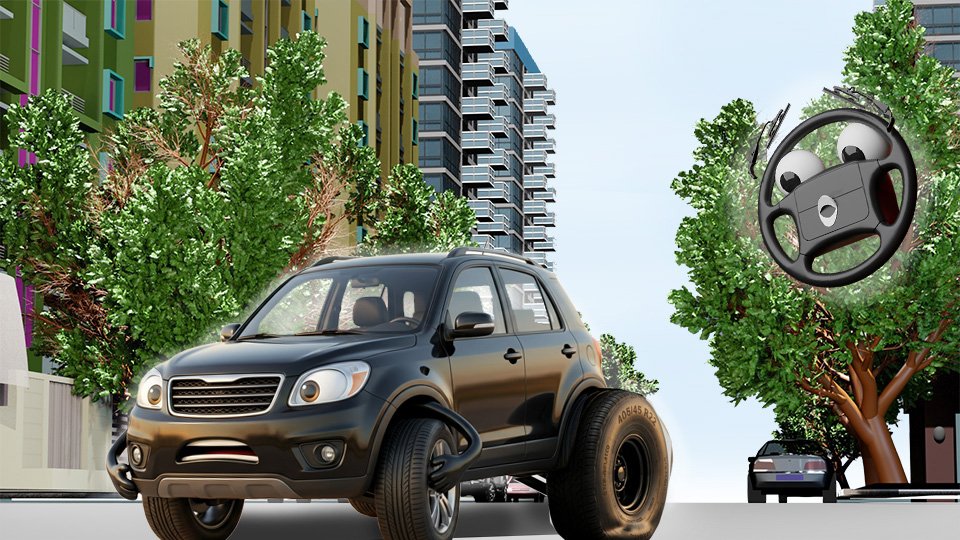
Every year, on the first genuinely cold morning of fall, Armando’s dashboard lights up with the little horseshoe-shaped tire pressure warning, and every year he is startled anew, as though his car has personally betrayed him rather than simply reported the weather.

🌡️ The Gas Law, Garage Edition

The air inside your tires behaves the way gas always behaves: it contracts when it’s cold and expands when it’s warm.

As a rough rule of thumb, tire pressure drops about 1 PSI (pounds per square inch, the unit your gauge reads in) for every 10°F drop in temperature.

Nothing leaked. Nothing broke. The air just got colder and took up less space, exactly the way it would in a balloon left outside overnight.

🚨 Why the Light Comes On in October, Not July

Your car probably has a Tire Pressure Monitoring System (TPMS). Each wheel has a little sensor that reports pressure to your dashboard. That TPMS is watching for exactly this shift.

A 30°F overnight temperature drop, which is an ordinary Tuesday for a lot of the country in fall, is enough to knock several PSI off tires that were perfectly fine the week before.

The little symbol on the dashboard isn’t reporting a new problem. It’s reporting an old one you hadn’t noticed yet, brought on by the season.

❄️ Checking Pressure the Right Way

There are a couple of ways to check your tire pressure — with your own tire pressure gauge, or with one at a gas station.

Either way, you’re looking for the valve stem — a small, rubber or metal nub sticking out of the wheel, usually near the edge, with a little cap screwed onto the end of it. Unscrew that cap (it’s not sealed on tight, just twist), and that’s where a gauge or an air hose connects.

To actually check the pressure, press the open end of the gauge straight onto the valve stem and hold it firmly in place for a second or two. You’ll hear a quick hiss of air — that’s normal, just the gauge grabbing a reading, not the tire deflating. If the hiss keeps going and won’t stop, you’re not pressed on straight; pull off and try again at a slightly different angle.

Where you find the actual number depends on the type of gauge. A digital gauge shows it right on a small screen, plain and simple. A dial gauge has a round face with a needle, like a tiny clock — read wherever the needle stops. And the classic pencil-style gauge (the kind that looks like a fat pen) has a numbered stick that pops out the end when you press it on — the number lined up at the edge of the housing when it stops moving is your reading.

At the gas station, look for a stand a little apart from the pumps, usually offering both air and water. Some have a coin slot or credit card reader on them, but it’s worth trying the hose first regardless — a fair number of stations run the air for free, sometimes automatically, sometimes if you just ask at the counter. A couple of states (California and Connecticut, notably) actually require gas stations to offer air for free by law, though that’s not the case everywhere, so it’s worth knowing it varies rather than assuming either way.

Check pressure when tires are “cold” — meaning the car’s been parked for at least a few hours, ideally overnight, before you’ve driven more than a mile or two. Driving heats the air inside the tire through friction, which temporarily inflates the reading and hides the real number.

And use the PSI figure on the sticker inside your driver’s door jamb, not the number printed on the tire’s sidewall — the sidewall number is the tire’s maximum rating, not your vehicle’s recommended pressure.

🎈 The Other Direction: Overinflation in Summer

The same physics runs in reverse come summer. Tires filled to the number on the door jamb on a cool spring morning can creep several PSI over spec by a hot July afternoon, especially after a highway drive. Overinflated tires wear unevenly down the center and lose some of their contact patch, so it’s worth a quick recheck when the seasons flip the other way, too.

🛠️ Gear Worth Having

TEKTON 5941 Digital Tire Gauge — a lit display so you can actually read cold-morning pressure checks before the sun’s fully up.

DEWALT 20V MAX Tire Inflator — cordless and strong enough to bring a tire up to spec fast on a cold morning, not just top it off.

AstroAI Portable Tire Inflator — a budget-friendly compressor that lives in the trunk for exactly this seasonal ritual.

As an Amazon affiliate, I earn from qualifying purchases. Thank you for supporting GrumblePark.

🔗 Related Reads


GrumblePark is part of the WhistleBump group – find the rest of the family at WhistleBump.com.

46003

©2026 John D Reinhart/GrumblePark.com — All rights reserved