
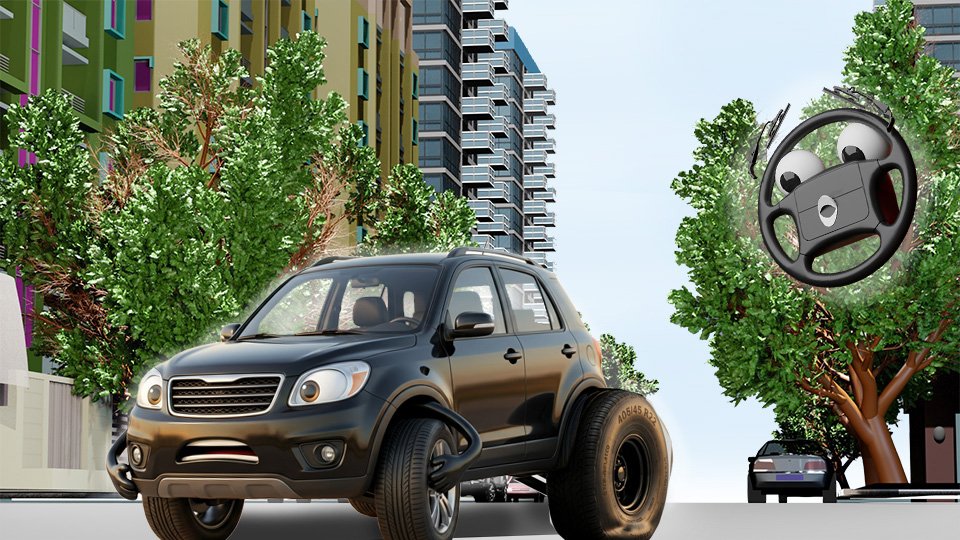
Every year, on the first genuinely cold morning of fall, Armando’s dashboard lights up with the little horseshoe-shaped tire pressure warning, and every year he is startled anew, as though his car has personally betrayed him rather than simply reported the weather.
🌡️ The Gas Law, Garage Edition
The air inside your tires behaves the way gas always behaves: it contracts when it’s cold and expands when it’s warm.
As a rough rule of thumb, tire pressure drops about 1 PSI (pounds per square inch, the unit your gauge reads in) for every 10°F drop in temperature.
Nothing leaked. Nothing broke. The air just got colder and took up less space, exactly the way it would in a balloon left outside overnight.
🚨 Why the Light Comes On in October, Not July
Your car probably has a Tire Pressure Monitoring System (TPMS). Each wheel has a little sensor that reports pressure to your dashboard. That TPMS is watching for exactly this shift.
A 30°F overnight temperature drop, which is an ordinary Tuesday for a lot of the country in fall, is enough to knock several PSI off tires that were perfectly fine the week before.
The little symbol on the dashboard isn’t reporting a new problem. It’s reporting an old one you hadn’t noticed yet, brought on by the season.
❄️ Checking Pressure the Right Way
There are a couple of ways to check your tire pressure — with your own tire pressure gauge, or with one at a gas station.
Either way, you’re looking for the valve stem — a small, rubber or metal nub sticking out of the wheel, usually near the edge, with a little cap screwed onto the end of it. Unscrew that cap (it’s not sealed on tight, just twist), and that’s where a gauge or an air hose connects.
To actually check the pressure, press the open end of the gauge straight onto the valve stem and hold it firmly in place for a second or two. You’ll hear a quick hiss of air — that’s normal, just the gauge grabbing a reading, not the tire deflating. If the hiss keeps going and won’t stop, you’re not pressed on straight; pull off and try again at a slightly different angle.
Where you find the actual number depends on the type of gauge. A digital gauge shows it right on a small screen, plain and simple. A dial gauge has a round face with a needle, like a tiny clock — read wherever the needle stops. And the classic pencil-style gauge (the kind that looks like a fat pen) has a numbered stick that pops out the end when you press it on — the number lined up at the edge of the housing when it stops moving is your reading.
At the gas station, look for a stand a little apart from the pumps, usually offering both air and water. Some have a coin slot or credit card reader on them, but it’s worth trying the hose first regardless — a fair number of stations run the air for free, sometimes automatically, sometimes if you just ask at the counter. A couple of states (California and Connecticut, notably) actually require gas stations to offer air for free by law, though that’s not the case everywhere, so it’s worth knowing it varies rather than assuming either way.
Check pressure when tires are “cold” — meaning the car’s been parked for at least a few hours, ideally overnight, before you’ve driven more than a mile or two. Driving heats the air inside the tire through friction, which temporarily inflates the reading and hides the real number.
And use the PSI figure on the sticker inside your driver’s door jamb, not the number printed on the tire’s sidewall — the sidewall number is the tire’s maximum rating, not your vehicle’s recommended pressure.
🎈 The Other Direction: Overinflation in Summer
The same physics runs in reverse come summer. Tires filled to the number on the door jamb on a cool spring morning can creep several PSI over spec by a hot July afternoon, especially after a highway drive. Overinflated tires wear unevenly down the center and lose some of their contact patch, so it’s worth a quick recheck when the seasons flip the other way, too.
🛠️ Gear Worth Having
TEKTON 5941 Digital Tire Gauge — a lit display so you can actually read cold-morning pressure checks before the sun’s fully up.
DEWALT 20V MAX Tire Inflator — cordless and strong enough to bring a tire up to spec fast on a cold morning, not just top it off.
AstroAI Portable Tire Inflator — a budget-friendly compressor that lives in the trunk for exactly this seasonal ritual.
As an Amazon affiliate, I earn from qualifying purchases. Thank you for supporting GrumblePark.
🔗 Related Reads
- How to Read a Tire’s Sidewall
- How to Check for Alignment Problems Without a Shop Visit
- Reading Uneven Wear Patterns (What Your Tires Are Telling You)
GrumblePark is part of the WhistleBump group – find the rest of the family at WhistleBump.com.
46003
©2026 John D Reinhart/GrumblePark.com — All rights reserved