
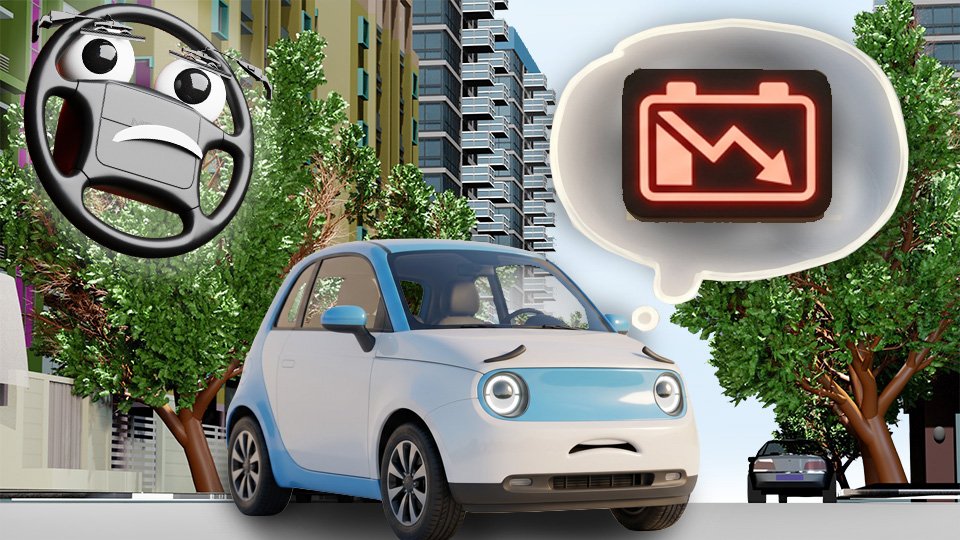
Amanda test-drove an EV once and found herself, twenty minutes in, doing anxious mental math about the remaining percentage on the dashboard and the distance back to civilization — a feeling she felt a little silly about afterward, right up until she learned that the phenomenon has an actual name and a real physical basis, not just a case of nerves.
📊 What Range Anxiety Actually Is
Range anxiety is the well-documented worry about running out of charge before reaching a destination or charging station. Unlike a gas car, where a low-fuel light means a station is very likely minutes away, an EV’s charging infrastructure is genuinely less dense in a lot of areas, which makes the underlying worry a reasonable response to real infrastructure, not just unfamiliarity.
❄️ Why Cold Weather Makes It Worse (The Actual Physics)
Battery chemistry is measurably less efficient at low temperatures. The chemical reactions that release energy simply run slower in the cold, meaning less usable power for the same battery charge.
On top of that, cabin heating in an EV draws directly from the same battery that powers the motor (unlike a gas car, which uses waste engine heat for free), compounding the range loss further.
A 20–30% real-world range reduction in genuinely cold weather is a normal, physics-based outcome, not a malfunction.
📉 Highway Speed Costs More Range Than City Driving
This one runs backward from gas-car intuition.
Aerodynamic drag increases sharply with speed, and EVs feel that cost directly in range in a way gas cars mask somewhat through their own efficiency curve.
Sustained highway speeds noticeably shorten an EV’s real-world range compared to its city-driving efficiency rating.
🗺️ Planning Around the Real Number, Not the Optimistic One
Most EV navigation systems and apps calculate charging stops based on real-time conditions — temperature, elevation, current charge — rather than the vehicle’s best-case EPA rating.
Trusting that planned number over the number on the dashboard’s simple range estimate avoids most genuine anxiety-inducing surprises.
Give yourself a mental cushion – deduct 50 miles from what the car says. The car says you have 300 miles – set your mental odometer to 250. Using that 50-mile buffer, you’ll never run out of charge.
✅ The Habit That Actually Solves Most of This
Charging overnight at home, routinely, means starting most days at or near full.
Range anxiety mostly shows up on unusually long trips outside normal routine, not during ordinary daily driving, where the math almost always works out with real margin to spare.
The absolute truth: being nervous about how long the battery is not only okay, it’s normal.
Trust that the car’s electronics are telling you the truth, use your buffer, and relax.
🛠️ Gear Worth Having
ChargePoint Home Flex Level 2 EV Charger — a reliable overnight charge at home is the single biggest reducer of genuine range anxiety.
Portable Level 1/2 EV Charger (J1772) — a backup option for charging away from a dedicated home setup, worth keeping in the trunk.
AccuTire Digital Tire Gauge — correct tire pressure measurably affects range — underinflated tires add rolling resistance that costs real miles.
As an Amazon affiliate, I earn from qualifying purchases. Thank you for supporting GrumblePark.
🔗 Related Reads
- EV Charging Levels Explained (Level 1, 2, and DC Fast Charging)
- What’s Actually Different About EV Maintenance
- How Your Alternator Keeps Everything Running
GrumblePark is part of the WhistleBump group – find the rest of the family at WhistleBump.com.
43008
©2026 John D Reinhart/GrumblePark.com — All rights reserved