
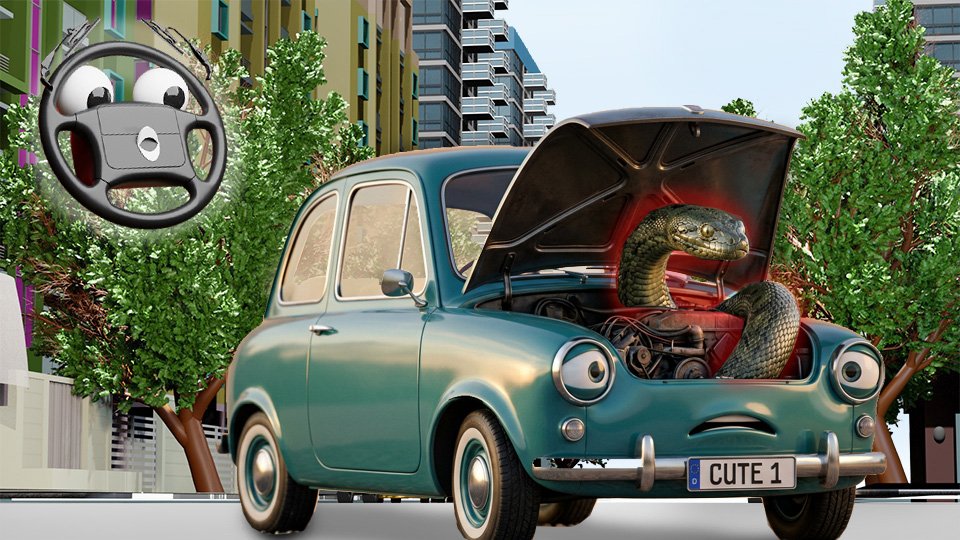
Amanda pulls into her driveway after a long, hot highway drive, shuts off the engine, and hears it — a faint hiss from under the hood, like the car itself just let out a long, tired sigh after a hard day. Her brain, unhelpfully, immediately files this under “things that precede an explosion in movies.” Good news: your car is not a movie, and it is not about to explode. Let’s talk about what that sound actually is.
✅ The Genuinely Normal Version
Here’s the twist: a quiet hiss right after shutdown is usually your engine doing something completely boring and responsible — letting built-up heat and pressure settle down now that it’s off duty. Think of it less like a bomb defusing and more like a kettle easing off the boil, or a pool float slowly giving up the will to stay inflated. It typically lasts a few seconds to a minute, and then it’s done, and your car goes back to just sitting there being a car.
🚨 The Version Worth Actually Investigating
Every rule has an exception, and this one’s is a coolant leak. If the hiss is louder, sticks around longer, or comes with a little wisp of steam — especially paired with a sweet smell (yes, sweet — coolant smells vaguely like syrup, which is a strange thing for engine fluid to do, but here we are) — that’s coolant meeting a hot surface it shouldn’t be meeting. Worth a look, not a panic.
💨 Steam vs. Smoke: The One Distinction That Actually Matters
Steam is white or light gray, drifts off fairly quickly, and smells faintly sweet if it’s coolant-related. Smoke is a different animal entirely — lingering, blue-gray or thick and dark — and it means something else is going on. Good news: telling them apart doesn’t require a mechanic’s badge, just a glance and a sniff.
🔍 What to Actually Do About It
Once the engine’s fully cool — never pop the hood on a hot one, that’s asking for a very bad time — take a peek at the coolant reservoir (the little plastic tank, usually with min/max lines right on the side) and see where the level sits. Low? That’s your answer, and it’s a genuinely easy fix, not a five-alarm one.
In a nutshell, you’ll want to add coolant to that little tank until it shows Full. You can Google or YouTube it for the details that exactly match your vehicle.
⚠️ The AC Hiss, Just So You Know
If the hiss happens specifically when you turn the air conditioning off rather than the whole engine, that’s a completely separate, equally normal thing — the AC system’s own pressure settling down. Different system, same “nothing to see here” energy. Move along.
🛠️ Gear Worth Having
Coolant Drain Pan — slide it under the car overnight if you want to know for sure whether anything’s actually dripping. No expertise required, just patience and a flashlight the next morning.
HeroBeam Car Emergency Flashlight (Twin Pack) — for actually seeing what’s going on under there instead of squinting into the dark and hoping.
Prestone 50/50 Ready-to-Use Antifreeze + Coolant — pre-mixed, so if the reservoir’s just low, you pour and you’re done. No ratios, no chemistry degree required.
As an Amazon affiliate, I earn from qualifying purchases. Thank you for supporting GrumblePark.
🔗 Related Reads
- Sweet or Syrupy Smell: Why That’s a Coolant Leak Talking
- Rattling at Idle vs. Rattling Over Bumps
- Musty AC Smell: It’s Almost Always the Cabin Filter
GrumblePark is part of the WhistleBump group – find the rest of the family at WhistleBump.com.
47005
©2026 John D Reinhart/GrumblePark.com — All rights reserved