
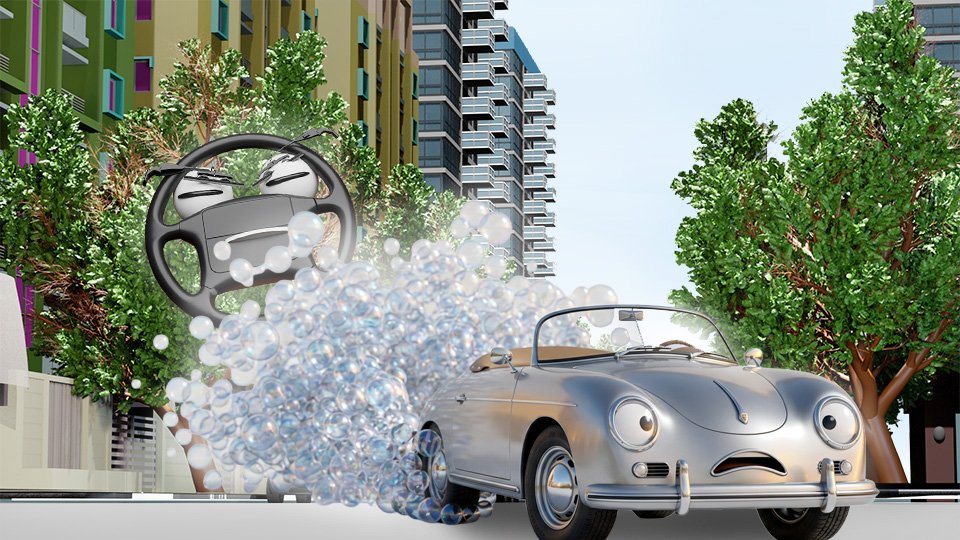
Amanda’s mechanic mentioned bleeding the brakes after a fluid change, a phrase that always sounded faintly medical and slightly alarming to her, and that she’s never actually had explained in plain terms. This one’s worth understanding as a concept — it’s genuinely a job for a shop, not a driveway project, but knowing why it matters helps you understand what you’re paying for.
🪡 Why Air Is the Enemy of a Hydraulic System
Brake fluid works because it’s incompressible — pressure applied at the pedal transmits instantly and fully through the lines to the calipers. Air, unlike fluid, compresses easily. Even a small air bubble trapped in the line absorbs some of that pedal pressure by compressing instead of transmitting it, which is exactly what produces a soft, spongy pedal.
🔧 How Air Gets In Anytime the System Is Opened
Any time a brake line is disconnected — replacing a caliper, a hose, or doing a full fluid flush — air enters the system the moment it’s opened up. Bleeding isn’t an optional extra step after this kind of work; it’s the necessary last step that makes the repair actually functional.
🔁 What a Mechanic Is Actually Doing
Working one wheel at a time, a small valve at each caliper gets briefly opened while fluid is pushed through, forcing out any trapped air along with a bit of old fluid — repeated until only clean, bubble-free fluid comes out. It’s genuinely fiddly, precise work, done in a specific order for your particular car.
🧪 How You’d Actually Notice This Is Needed
A pedal that’s gone soft or spongy — sinking further than normal before the brakes actually engage — without an obvious fluid leak is the classic sign air’s gotten into the system somewhere. That’s the detail worth relaying to a mechanic exactly as you feel it.
🧭 Why This Is Explicitly Not a First DIY Project
Getting the order wrong, or letting the fluid reservoir run low mid-process, can actually introduce more air rather than remove it — the opposite of the intended outcome. This is one of the more precise procedures on the whole site, and it’s worth treating it that way: understand why it matters, then let a shop actually do it.
🛠️ Gear Worth Having
ITEQ Brake Fluid Tester Pen — confirms fluid condition once a mechanic’s finished a bleed, before you’re back on the road.
As an Amazon affiliate, I earn from qualifying purchases. Thank you for supporting GrumblePark.
🔗 Related Reads
- Soft Brake Pedal: What It Means and Why It’s Urgent
- Brake Fluid: Why It Needs Changing Even If Nothing Feels Wrong
- How ABS Actually Works (and Why the Pedal Pulses)
GrumblePark is part of the WhistleBump Group — find the rest of the family at WhistleBump.com.
45009
©2026 John D Reinhart/GrumblePark.com — All rights reserved