That Grinding Noise That Says You Waited Too Long

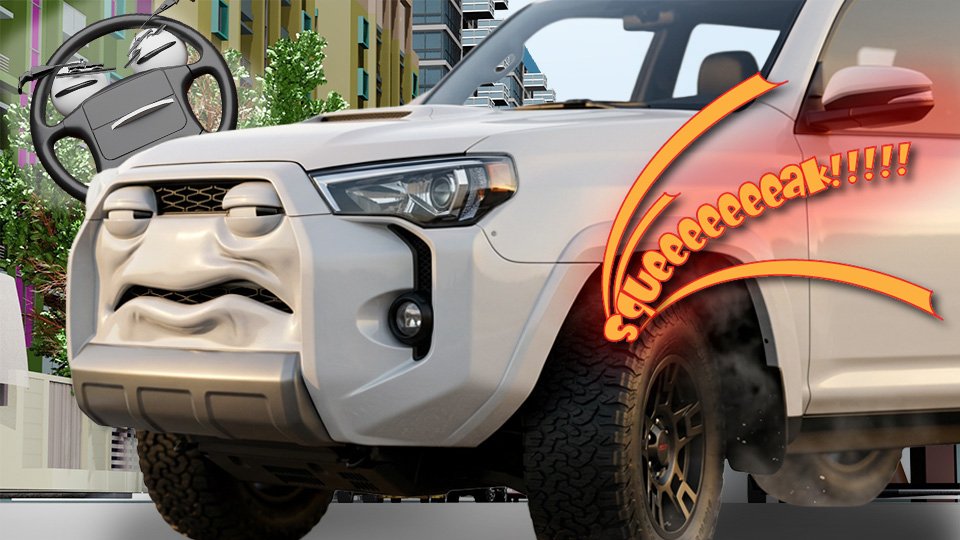
Grinding when you brake has one dominant cause, and it’s the one you were warned about with a much quieter sound first.

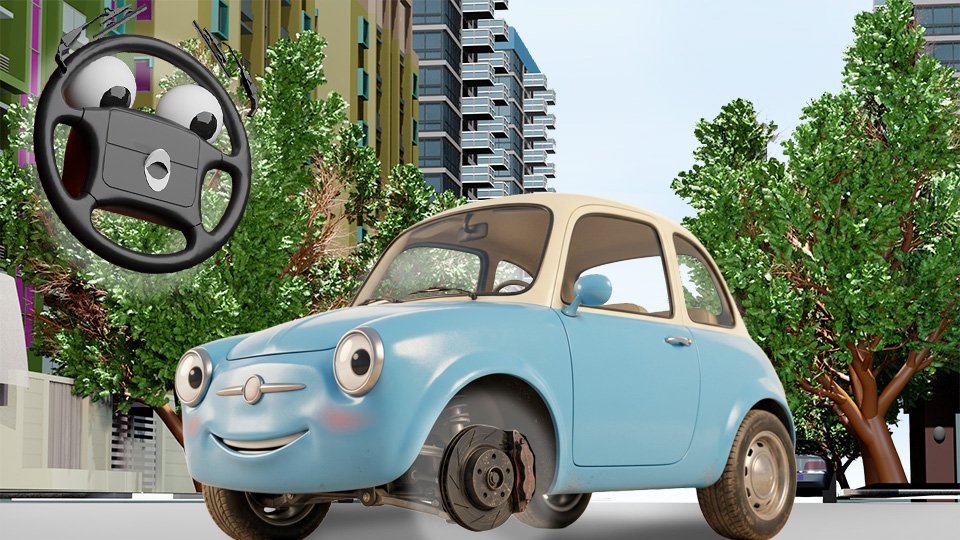
Armando heard a grinding sound from his front wheel one morning, turned the radio up slightly, and drove on it for another two weeks. Although it’s an easy fix, it’s the exact move that turns a moderate brake job into a considerably more expensive one. Turns out ignorance may not be bliss.

๐Ÿ”ง Quick Refresher: What’s Actually Back There

Each wheel has a flat metal disc called a rotor, which spins along with the wheel. A brake pad is the part that presses against that spinning disc every time you brake โ€” soft on purpose, so it wears down instead of the more expensive rotor underneath it. The pad itself is really a chunk of friction material glued to a thin metal plate called the backing plate, which is what actually holds it in the caliper. That backing plate matters in a minute.

๐Ÿ”” The Squeal That Comes Before the Grind

Most brake pads include a small metal wear indicator -a tiny tab built right into the pad, designed to touch the rotor and produce a high-pitched squeal once the friction material’s gotten thin.

That squeal is an intentional early-warning feature, not a malfunction, and it’s meant to be annoying enough that you actually notice it.

โš ๏ธ The Grind Is a Different, Later Stage

If the squeal goes unaddressed, the friction material eventually wears down completely โ€” nothing left of the pad but that thin metal backing plate we just mentioned.

The grinding sound is that bare metal plate grinding directly against the rotor, metal on metal, with nothing left to actually do the job of stopping the car safely.

๐Ÿ’ฐ Why This Escalation Gets Expensive Fast

Replacing worn pads alone is a moderate, routine cost. But that metal-on-metal grinding gouges grooves straight into the rotor’s surface, turning what should’ve been a pads-only job into a pads-and-rotors job โ€” often several times the original price.

The squeal-to-grind window is exactly the stretch where the cheap fix is still on the table.

๐Ÿš— Why It Feels Different, Too

Metal-on-metal contact doesn’t just sound worse โ€” it brakes worse.

Bare metal against a rotor grips far less consistently than the friction material it replaced. A grinding brake isn’t just annoying; it’s measurably worse at the one job it has.

๐Ÿšจ Why This One Doesn’t Wait

Most maintenance items on this site have some real flexibility in timing. Grinding brakes don’t โ€” the safety margin shrinks with every mile you keep driving on pads that are already gone.

This is a get-it-looked-at-this-week situation, not an eventually one.

๐Ÿ› ๏ธ Gear Worth Having

Camrusic Brake Pad Thickness Gauge โ€” slide it against the pad through the wheel for an exact reading, so you can tell a shop exactly how bad it is instead of just saying “it grinds.”

HeroBeam Car Emergency Flashlight (Twin Pack) โ€” a simple magnetic light for actually seeing the worn pad through the wheel spokes, no tools or disassembly involved.

XOOL Emergency Warning Triangle Kit โ€” worth having in the trunk regardless, and especially useful if the grinding’s bad enough that waiting for a tow beats continuing to drive on it.

As an Amazon affiliate, I earn from qualifying purchases. Thank you for supporting GrumblePark.

๐Ÿ”— Related Reads


GrumblePark is part of the WhistleBump group – find the rest of the family at WhistleBump.com.

45002

ยฉ2026 John D Reinhart/GrumblePark.com โ€” All rights reserved

How to Tell If Your Brake Pads Need Replacing

You don’t need a mechanic to tell you your brake pads are getting low. Here’s how to check yourself, no tools required, in under five minutes.

Armando has always relied entirely on his mechanic to tell him when brake pads need replacing, on the assumption that checking this himself would require tools or knowledge he doesn’t have. It genuinely doesn’t โ€” this is one of the more accessible checks on the whole car, and it starts with just looking.

๐Ÿ‘€ The Visual Check Through the Wheel

Look at one of your wheels and you’ll notice the metal rim has gaps or slots in it โ€” those are the spokes. Through those gaps, you can usually see straight into the wheel, where a flat metal disc (the rotor) sits with a thinner piece of material pressed against it on each side (the pad). That pad material is what you’re checking. If it looks like a decent, healthy slab โ€” thicker than a couple of stacked coins โ€” you’re fine. If it looks thin, more like a sliver than a slab, that’s your sign it’s getting close to time.

๐Ÿ“ A Direct Measurement Beats Eyeballing

Lighting and the angle through which you’re peering through the spokes can make a guess-by-eye surprisingly unreliable โ€” the same pad can look “probably fine” or “probably not” depending on where the sun is. A small tool called a brake pad thickness gauge solves that by sliding right up against the pad material itself and giving you an actual number instead of a squint and a shrug.

๐Ÿ”” The Squeal Is an Intentional Signal, Not Bad Luck

Here’s something most drivers seldom get told: a lot of brake pads have a tiny metal tab built into them specifically to make noise once the pad wears down far enough โ€” a built-in alarm, on purpose.

So if you hear a high-pitched squeal that only happens while you’re actually braking, and goes quiet the moment you let off the pedal, that’s very likely your car deliberately trying to get your attention, not just an odd noise to shrug off.

โš–๏ธ Uneven Wear Between Wheels Is Its Own Signal

If you check all four wheels and one pad looks noticeably thinner than the rest, that’s worth mentioning to a mechanic specifically, not just something to replace and forget. It often means something else on that wheel (like a part that’s not fully releasing after you brake) is quietly wearing that one pad down faster than it should.

Worth describing exactly what you found, since “one wheel’s pad looked thinner” is a genuinely useful detail for whoever ends up diagnosing it.

๐Ÿš— The Feel Test, For What It’s Worth

Here are a couple of early hints worth paying attention to:

  • The brake pedal seems to need to go down further than it used to before the car actually starts slowing
  • Stopping just feels like it takes a bit longer than it used to

If you feel either one of these while driving, it might be worth having the brake system examined by a professional.

๐Ÿ› ๏ธ Gear Worth Having

Camrusic Brake Pad Thickness Gauge โ€” an actual measurement instead of guessing through the wheel spokes, no disassembly involved.

HeroBeam Car Emergency Flashlight (Twin Pack) โ€” shine it through the spokes and you can actually see what you’re looking at instead of squinting into a dark wheel well.

ABN Mechanics Automotive Stethoscope Kit โ€” if you hear a squeal and want to confirm which wheel it’s actually coming from before describing it to anyone.

As an Amazon affiliate, I earn from qualifying purchases. Thank you for supporting GrumblePark.com.

๐Ÿ”— Related Reads


GrumblePark is part of the WhistleBump group – find the rest of the family at WhistleBump.com.

45006

ยฉ2026 John D Reinhart/GrumblePark.com โ€” All rights reserved

How Brakes Actually Work: Pads, Rotors, and Calipers Explained

Pressing the pedal and the car actually stopping involves more steps than most drivers ever think about. Here’s the whole chain, explained without the jargon.

Amanda has pressed a brake pedal roughly a million times in her driving life and has never once had to think about what happens between her foot moving and the car actually slowing down โ€” which is exactly how it should feel, right up until the moment you’re trying to figure out why it stopped feeling that simple.

๐Ÿฆพ Hydraulics: The Garden Hose Trick

Here’s the whole secret to how brakes work, and you already understand it: liquids don’t squish.

Cap one end of a garden hose, push water in the other end, and that pressure shows up everywhere in the hose at once, instantly, because the water has nowhere to compress into.

Your brake system uses that exact trick. Pressing the pedal pushes a piston into a sealed chamber called the master cylinder, which shoves brake fluid through sealed lines running out to all four wheels โ€” and because that fluid can’t compress, your foot’s push arrives at every wheel at once, in an instant.

There’s also a helper in the mix called a brake booster, which just means something (engine vacuum, or an electric pump on some cars) is quietly making your foot’s push stronger than your leg alone could manage. You’re not muscling the car to a stop โ€” the system is doing the heavy lifting, your foot is just giving it the signal.

๐Ÿ”ต The Caliper: Where a Push Becomes a Squeeze

At each wheel, that traveling pressure reaches a part called the caliper โ€” think of it like a C-shaped clamp that straddles the spinning disc.

The pressure pushes a small piston inside the caliper, and that piston squeezes two brake pads against that disc from both sides, like pinching something between your thumb and finger.

That squeeze is the entire mechanical event. Everything upstream of it โ€” the pedal, the fluid, the lines โ€” exists purely to deliver force to this one pinching motion.

๐Ÿ”ด The Rotor: Where Squeezing Turns Into Heat

The disc being squeezed is called the rotor, and it spins along with the wheel.

Squeeze two rough surfaces against a spinning disc and you get friction, and friction turns motion into heat โ€” that’s not a side effect, that’s literally the physics of how a car slows down.

All that speed you were carrying has to go somewhere, and it goes out as heat, right there at the rotor. That’s why rotors get genuinely hot after hard braking, and why they’re designed with heat in mind, not just strength.

๐Ÿงฑ Pads: Built to Wear Out on Purpose

Brake pads are made from a material that’s deliberately softer than the rotor โ€” which sounds backwards until you realize why.

A pad is designed to be the part that wears down and gets replaced every so often, precisely so the rotor (a bigger, more expensive piece of metal) doesn’t have to.

It’s the same idea as a pencil eraser wearing down instead of the pencil โ€” a sacrificial piece, on purpose, doing its job exactly as intended every time it gets a little thinner.

๐Ÿงญ Why Knowing This Chain Actually Helps

Every brake symptom you’ll ever run into โ€” a grinding sound, a shaky steering wheel, a pedal that feels soft โ€” is just one specific link in this exact chain, misbehaving in one specific way.

Once you know the chain (pedal โ†’ fluid โ†’ caliper โ†’ pad โ†’ rotor), every future brake mystery stops being a brand-new puzzle and starts being “oh, that’s the pad part” or “oh, that’s the fluid part.”

You don’t need to fix any of it yourself for that to be useful โ€” just knowing which link is talking to you is most of the battle.

๐Ÿ› ๏ธ Gear Worth Having

Camrusic Brake Pad Thickness Gauge โ€” now that you know what a pad actually is, this lets you check your own with a real number instead of a guess.

HeroBeam Car Emergency Flashlight (Twin Pack) โ€” shine it through the wheel spokes and you can actually see the caliper, pad, and rotor you just read about.

ABN Mechanics Automotive Stethoscope Kit โ€” listen to the system in action, useful groundwork for the noise-related posts still to come.

As an Amazon affiliate, I earn from qualifying purchases. Thank you for supporting GrumblePark.

๐Ÿ”— Related Reads


GrumblePark is part of the WhistleBump group – find the rest of the family at WhistleBump.com.

45001

ยฉ2026 John D Reinhart/GrumblePark.com โ€” All rights reserved

Soft Brake Pedal: What It Means and Why It’s Urgent

A brake pedal that sinks toward the floor is one of the more serious symptoms a car can show you. Here’s why, and what to do.

Meta description: A brake pedal that sinks toward the floor is one of the more serious symptoms a car can show you. Here’s why, and what to do.

SEO tags: soft brake pedal, spongy brakes, brake pedal sinking, brake system failure

Soft Brake Pedal: What It Means and Why It’s Urgent

Armando noticed his brake pedal felt a little softer than usual one week, sinking slightly further toward the floor than it used to before engaging โ€” and filed it away as something to mention at his next oil change, three weeks out. This is the one symptom on the entire STOPS list that genuinely shouldn’t wait that long.

๐Ÿ’ง How the Brakes Work

You’ll remember from high school physics that liquids don’t compress. That’s the heart of your car’s brake system. When you step on the brake pedal, you push a hydraulic plunger that shoves brake fluid out to the brake calipers at each wheel, pushing them closed to grab the wheel’s rotor and slow it down.

If the brake pedal feels soft or spongy, it almost always means there’s either air trapped in the brake lines (because air compresses where liquids don’t) or a fluid leak somewhere in the system, meaning there’s simply not enough fluid volume left to build proper pressure.

Both are genuine hydraulic failures in progress, just at different stages.

๐Ÿ“‰ Why It Tends to Get Worse, Not Better

A slow leak continues leaking. Air that’s entered the system doesn’t work its way back out on its own. A soft pedal noticed today is very often a firmer, more urgent problem in a week or two โ€” this is not a symptom that reliably plateaus or resolves itself.

๐Ÿšจ The Pedal-Sinks-to-the-Floor Emergency

A pedal that continues sinking toward the floor under steady pressure, rather than firming up and holding, indicates a significant loss of hydraulic pressure โ€” potentially a major leak or a failing master cylinder. This is a pull-over-immediately, do-not-continue-driving situation, not a schedule-an-appointment one.

๐Ÿ” What to Check First โ€” and What to Actually Do

A visual check of the brake fluid reservoir level (low fluid points toward a leak somewhere in the system) and a look underneath the car for any visible fluid on the ground or on a wheel are both quick, useful first steps before assuming the cause.

If the level is genuinely low but the pedal is soft rather than sinking straight to the floor, topping it off with the correct fluid (check your cap or owner’s manual for the exact type โ€” DOT 3 and DOT 4 aren’t always interchangeable) is a simple, safe thing anyone can do, and it may firm the pedal back up. But a fluid level that’s dropped on its own always means something’s off somewhere, even after a top-off โ€” this buys you time to get it looked at properly, it doesn’t replace getting it looked at.

If the pedal keeps sinking toward the floor no matter what, don’t try to top off, drive, or diagnose further. Pull over somewhere safe, put the car in park, and call for a tow. This is the one spot on the whole site where “get it looked at” means right now, not this week.

๐Ÿ› ๏ธ Gear Worth Having

  • Prestone DOT 3 Brake Fluid โ€” confirm your vehicle’s specified DOT rating first, then this is what actually goes in the reservoir for a safe top-off.
  • HeroBeam Car Emergency Flashlight (Twin Pack) โ€”a simple magnetic light for actually seeing fluid on the ground or a wheel, no crawling under the car blind.
  • XOOL Emergency Warning Triangle Kit โ€” worth keeping in the trunk regardless, and especially useful if the grinding is bad enough that you’d rather wait for a tow than keep driving on it.d worth having in the car regardless โ€” exactly the scenario it exists for.

As an Amazon affiliate, I earn from qualifying purchases. Thank you for supporting GrumblePark.


๐Ÿ”— Related Reads

  • How Brake Bleeding Works (and Why Air in the Lines Is a Problem)
  • Brake Fluid: Why It Needs Changing Even If Nothing Feels Wrong
  • How ABS Actually Works (and Why the Pedal Pulses)

GrumblePark is part of the WhistleBump Group โ€” find the rest of the family at WhistleBump.com.

45010

ยฉ2026 John D Reinhart/GrumblePark.com โ€” All rights reserved