
Squealing Belt vs. Squealing Brakes (How to Tell the Difference)

Two completely different problems make almost the same high-pitched sound. Here’s how to actually tell them apart.

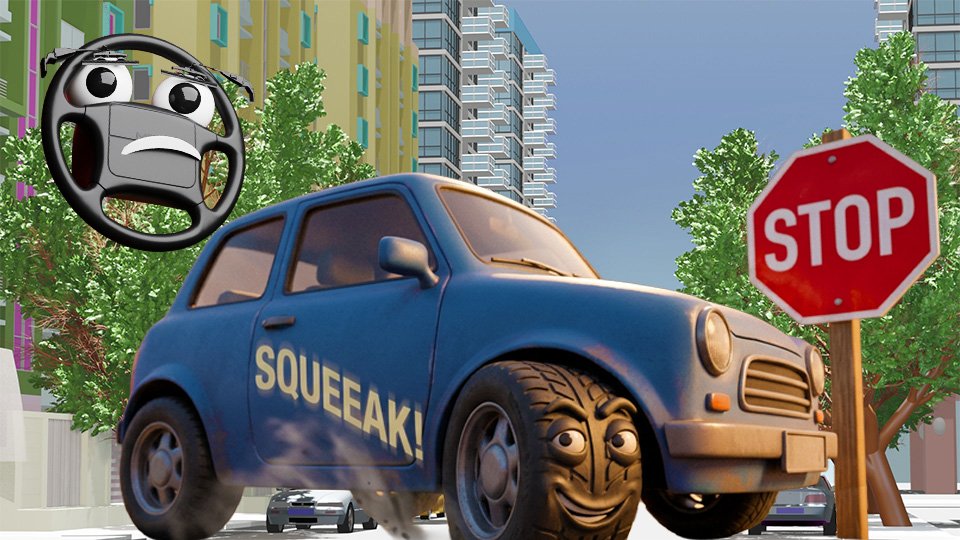
Armando hears a squeal from somewhere under the hood one cold morning and has, genuinely, no idea whether it’s coming from his brakes or his belt — both are entirely plausible, both sound roughly similar to an untrained ear, and both call for a different response entirely.

⏱️ When It Happens Is the First, Best Clue

A squealing belt is typically most noticeable at startup, especially in cold or damp weather, and often eases up once the engine’s been running a few minutes — sometimes reappearing briefly when you turn the wheel sharply or the AC compressor kicks on, both of which add load to the belt. A squealing brake happens specifically and consistently when you press the brake pedal, and goes silent the instant you release it.

👂 Location Is the Second Clue

A belt squeal comes from the front of the engine bay, generally centered rather than tied to one specific wheel. A brake squeal is localized to whichever wheel has the worn pad — often more noticeable from one side of the car than the other.

🔧 Why the Belt Squeals

A worn, glazed, or slightly loose serpentine belt slips against its pulleys under load rather than gripping cleanly — that slipping friction is what produces the squeal, most pronounced exactly when the belt is asked to do more work: startup, hard turns, AC engagement.

🔧 Why the Brake Squeals

As covered elsewhere, this is very often a deliberate wear indicator tab doing its intended job — a built-in early warning that a pad is getting low, meant to be noticed specifically during braking and nowhere else.

🧭 Why Getting This Right Matters

Both point toward genuine maintenance items, but on different timelines and different parts entirely — chasing a belt problem when it’s actually a brake wear indicator (or the reverse) wastes time and can let the real issue continue unaddressed while you’re looking in the wrong place.

🔍 When In Doubt, Isolate It

Coast to a stop without touching the brake pedal at all — if the squeal continues while rolling and unrelated to braking, it’s the belt. If it disappears entirely until you press the pedal again, it’s the brakes.

🛠️ Gear Worth Having

ABN Mechanics Automotive Stethoscope Kit — pinpoint exactly where a noise is coming from instead of guessing by ear alone.

BILITOOLS Serpentine Belt Tool Kit — the tools needed to actually inspect or replace a belt once it’s confirmed as the source.

Camrusic Brake Pad Thickness Gauge — slide it against the pad through the wheel for an exact reading, so you can describe exactly how bad it is to a shop instead of just saying “it grinds.”

As an Amazon affiliate, I earn from qualifying purchases. Thank you for supporting GrumblePark.

🔗 Related Reads


GrumblePark is part of the WhistleBump group – find the rest of the family at WhistleBump.com.

47002

©2026 John D Reinhart/GrumblePark.com — All rights reserved
Rattling at Idle vs. Rattling Over Bumps

A rattle that only happens at idle and a rattle that only happens over bumps point to almost entirely different parts of the car.

Armando’s car develops a rattle that he can only ever seem to catch at a red light, engine idling — completely silent the moment he starts moving, which frustrates every attempt to diagnose it while actually driving around.

🔥 Rattling at Idle: Often a Heat Shield

Almost every car has an exhaust shield. It’s a thin metal panel protecting nearby components and the car’s underside from exhaust heat.

The shield can come loose, making it one of the most common sources of an idle-specific rattle. At low engine RPM, the vibration at idle is often exactly the frequency that sets a loose shield buzzing. The same shield may stay quiet once road noise and higher RPM change the vibration pattern during actual driving.

🔁 About RPM

RPM stands for revolutions per minute — literally how many complete spins your engine’s crankshaft (the rotating shaft that turns the engine’s up-and-down piston motion into the spinning motion that eventually drives your wheels) makes every sixty seconds.

At idle — engine running, car in park or stopped at a light, foot off the gas entirely — most engines settle in somewhere around 600 to 1,000 RPM, just enough spinning to keep everything alive and the accessories running without stalling out. Press the gas pedal and you’re asking the engine to spin faster, which is exactly what climbing RPM means; ease off and it settles back down toward idle again.

The tachometer — the dial usually sitting right next to your speedometer in most vehicles (electric and hybrid vehicles usually don’t have one), numbered in thousands (a needle sitting on the “3” means 3,000 RPM, not 3) — is simply a window into a number your engine already knows about itself in real time.

Here’s why it’s worth understanding at all, beyond trivia: Idling RPM, like at a red light, is a very specific, very narrow band of vibration — low, steady, repetitive, almost like a single note held at a constant pitch. Driving RPM is a completely different note, changing constantly as you accelerate, cruise, and slow down. A loose part under your hood can sit there in total, undetected silence at one particular vibration frequency and then rattle like it’s trying to get your attention the moment the engine settles into a different one.

That’s the whole mystery behind a rattle that only shows up at a red light and vanishes the second you start rolling again — it’s not haunted, and it’s not your imagination. It’s just idle RPM finding the one frequency that loose heat shield was always waiting to complain at.

🔧 Why It’s Genuinely Minor, Usually

A rattling heat shield is annoying rather than dangerous in most cases — a couple of missing or rusted-through mounting clips is a common, inexpensive cause, sometimes fixable with a simple clamp or wire tie in a pinch, properly reattached with new hardware when convenient.

🚥 Rattling Over Bumps: A Different Category Entirely

A rattle or clunk specifically triggered by bumps, potholes, or uneven pavement — quiet on smooth road, quiet at idle — points toward suspension components: worn sway bar end links, loose strut mounts, or something as simple as an item shifting around in the trunk. This is a mechanically different question than the idle rattle, worth treating separately rather than assuming one explanation covers both.

🔍 The Elimination Process

Rule out the obvious first — an actual loose item in the trunk or under a seat is a genuinely common culprit for a bump-triggered rattle, and costs nothing to check. Beyond that, a mechanic’s stethoscope or simply having a passenger listen from outside the car while you drive slowly over a curb can help localize a persistent one.

⚠️ When a Suspension Rattle Is Worth Real Attention

A clunk over bumps paired with any change in how the car handles — more body roll, a pull to one side, unusual tire wear developing — suggests something beyond a simple loose clip and is worth a proper inspection rather than continuing to just live with the noise.

🛠️ Gear Worth Having

ABN Mechanics Automotive Stethoscope Kit — localize an idle rattle to the specific heat shield or bracket that’s loose.

BILITOOLS Serpentine Belt Tool Kit — belt-area rattles at idle sometimes trace back to a loose accessory bracket this tool gives you access to.

Autel AL319 OBD2 Scanner — rule out an unrelated sensor or mount issue that might be contributing to what sounds like a simple rattle.

As an Amazon affiliate, I earn from qualifying purchases. Thank you for supporting GrumblePark.

🔗 Related Reads


GrumblePark is part of the WhistleBump group – find the rest of the family at WhistleBump.com.

47006

©2026 John D Reinhart/GrumblePark.com — All rights reserved