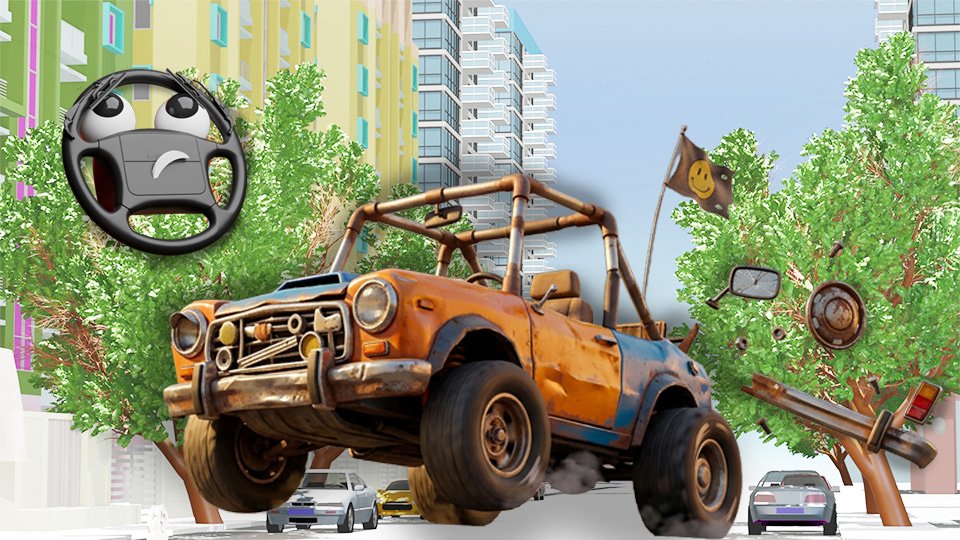
Clicking Noise When Turning: The Usual Suspects

A clicking noise specifically when you turn has a short, specific list of usual suspects. Here’s how to narrow it down.

Amanda notices a rhythmic clicking sound that only shows up when she turns into her driveway โ€” present on the turn, gone the instant she straightens out. Nice diagnostic skills, Amanda! That timing is a genuinely useful clue about where to start looking.

๐Ÿ”ง The Most Common Cause: A Worn CV Joint

If your car is front-wheel drive, and most are, the motor turns the transmission, which turns the drive wheel of the car. Between the transmission and the wheel is something called a Constant Velocity (or CV) joint. It allows the wheel to ride up and down over bumps and steer with the steering wheel while providing smooth, consistent power from the transmission.

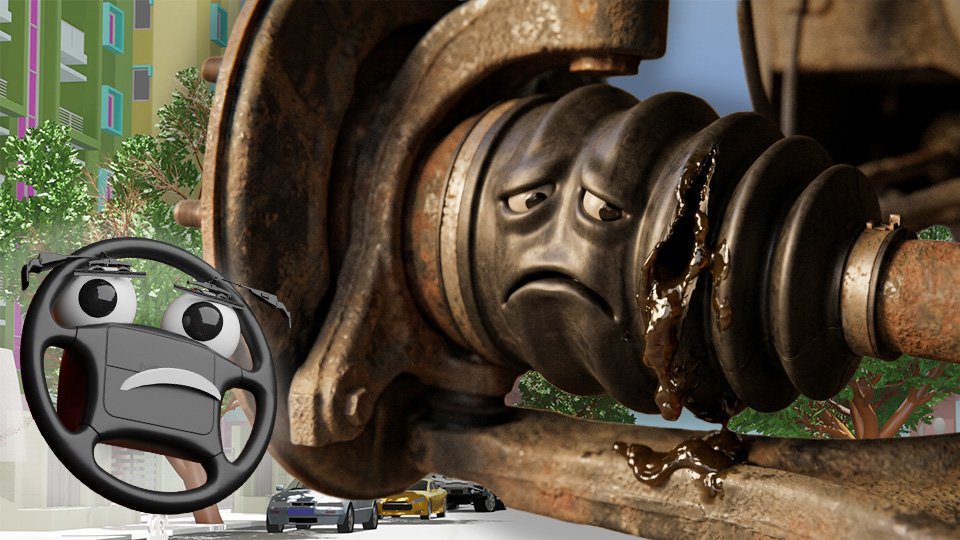
The CV joint has a rubber boot over it. The boot, packed with grease, keeps dirt and water and stuff out of the bearings in the CV joint.

A worn or damaged CV joint, especially one with a torn protective boot letting grease escape and dirt in, produces a distinct clicking or popping sound specifically when turning, most pronounced during tight, low-speed turns like parking lot maneuvers.

๐Ÿ” A Quick Way to Check the Boot

The rubber boot covering the CV joint is visible from underneath, near where the axle meets the wheel hub.

Take a flashlight with you. Look for a torn boot, or grease flung around the inside of the wheel well. If you see those things, it’s visible confirmation that the CV boot has gone south.

๐Ÿ›Ž๏ธ Other Suspects Worth Ruling Out

A worn wheel bearing can produce noise that changes with turning, though it’s often more of a humming or grinding that changes pitch with speed rather than a sharp click.

Loose or worn suspension components โ€” sway bar links, ball joints โ€” can also produce a clicking or clunking specifically under the twisting load of a turn. But that noise is more often a thunk than a clicking.

โš ๏ธ Why a Torn CV Boot Isn’t a Wait-It-Out Problem

Once the protective boot tears, the joint’s grease escapes and road grit gets in โ€” a joint that was fine yesterday starts wearing rapidly once that protective barrier is gone.

A torn boot caught early is a relatively inexpensive fix; a fully failed CV joint (which can eventually separate) is a considerably bigger repair and, in the worst case, a safety issue.

๐Ÿ”Š The Stethoscope Trick

If your adventurous, you can use an automotive stethoscope to pinpoint the exact source of the noise.

  • Turn the car’s wheel to one side.
  • Get the car up on a jack stand (never just on the jack)
  • Press a mechanic’s stethoscope pressed the CV joint
  • Have as assistant gently rock the wheel from side-to-side

This method will help you more precisely identify the source of the clicking. In either case, the car will need to go into the hands of an experienced mechanic.

๐Ÿ› ๏ธ Gear Worth Having

ABN Mechanics Automotive Stethoscope Kit โ€” isolate exactly which component is clicking rather than guessing from the driver’s seat.

TEKTON 1/2โ€ณ Drive Click Torque Wrench โ€” confirm wheel and suspension hardware is properly torqued, ruling out simple looseness before assuming a worn part.

Autel AL319 OBD2 Scanner โ€” some wheel speed sensor issues tied to bearing wear will throw a code worth checking.

As an Amazon affiliate, I earn from qualifying purchases. Thank you for supporting GrumblePark.

๐Ÿ”— Related Reads


GrumblePark is part of the WhistleBump group – find the rest of the family at WhistleBump.com.

47003

ยฉ2026 John D Reinhart/GrumblePark.com โ€” All rights reserved

Rattling at Idle vs. Rattling Over Bumps

A rattle that only happens at idle and a rattle that only happens over bumps point to almost entirely different parts of the car.

Armando’s car develops a rattle that he can only ever seem to catch at a red light, engine idling โ€” completely silent the moment he starts moving, which frustrates every attempt to diagnose it while actually driving around.

๐Ÿ”ฅ Rattling at Idle: Often a Heat Shield

Almost every car has an exhaust shield. It’s a thin metal panel protecting nearby components and the car’s underside from exhaust heat.

The shield can come loose, making it one of the most common sources of an idle-specific rattle. At low engine RPM, the vibration at idle is often exactly the frequency that sets a loose shield buzzing. The same shield may stay quiet once road noise and higher RPM change the vibration pattern during actual driving.

๐Ÿ” About RPM

RPM stands for revolutions per minute โ€” literally how many complete spins your engine’s crankshaft (the rotating shaft that turns the engine’s up-and-down piston motion into the spinning motion that eventually drives your wheels) makes every sixty seconds.

At idle โ€” engine running, car in park or stopped at a light, foot off the gas entirely โ€” most engines settle in somewhere around 600 to 1,000 RPM, just enough spinning to keep everything alive and the accessories running without stalling out. Press the gas pedal and you’re asking the engine to spin faster, which is exactly what climbing RPM means; ease off and it settles back down toward idle again.

The tachometer โ€” the dial usually sitting right next to your speedometer in most vehicles (electric and hybrid vehicles usually don’t have one), numbered in thousands (a needle sitting on the “3” means 3,000 RPM, not 3) โ€” is simply a window into a number your engine already knows about itself in real time.

Here’s why it’s worth understanding at all, beyond trivia: Idling RPM, like at a red light, is a very specific, very narrow band of vibration โ€” low, steady, repetitive, almost like a single note held at a constant pitch. Driving RPM is a completely different note, changing constantly as you accelerate, cruise, and slow down. A loose part under your hood can sit there in total, undetected silence at one particular vibration frequency and then rattle like it’s trying to get your attention the moment the engine settles into a different one.

That’s the whole mystery behind a rattle that only shows up at a red light and vanishes the second you start rolling again โ€” it’s not haunted, and it’s not your imagination. It’s just idle RPM finding the one frequency that loose heat shield was always waiting to complain at.

๐Ÿ”ง Why It’s Genuinely Minor, Usually

A rattling heat shield is annoying rather than dangerous in most cases โ€” a couple of missing or rusted-through mounting clips is a common, inexpensive cause, sometimes fixable with a simple clamp or wire tie in a pinch, properly reattached with new hardware when convenient.

๐Ÿšฅ Rattling Over Bumps: A Different Category Entirely

A rattle or clunk specifically triggered by bumps, potholes, or uneven pavement โ€” quiet on smooth road, quiet at idle โ€” points toward suspension components: worn sway bar end links, loose strut mounts, or something as simple as an item shifting around in the trunk. This is a mechanically different question than the idle rattle, worth treating separately rather than assuming one explanation covers both.

๐Ÿ” The Elimination Process

Rule out the obvious first โ€” an actual loose item in the trunk or under a seat is a genuinely common culprit for a bump-triggered rattle, and costs nothing to check. Beyond that, a mechanic’s stethoscope or simply having a passenger listen from outside the car while you drive slowly over a curb can help localize a persistent one.

โš ๏ธ When a Suspension Rattle Is Worth Real Attention

A clunk over bumps paired with any change in how the car handles โ€” more body roll, a pull to one side, unusual tire wear developing โ€” suggests something beyond a simple loose clip and is worth a proper inspection rather than continuing to just live with the noise.

๐Ÿ› ๏ธ Gear Worth Having

ABN Mechanics Automotive Stethoscope Kit โ€” localize an idle rattle to the specific heat shield or bracket that’s loose.

BILITOOLS Serpentine Belt Tool Kit โ€” belt-area rattles at idle sometimes trace back to a loose accessory bracket this tool gives you access to.

Autel AL319 OBD2 Scanner โ€” rule out an unrelated sensor or mount issue that might be contributing to what sounds like a simple rattle.

As an Amazon affiliate, I earn from qualifying purchases. Thank you for supporting GrumblePark.

๐Ÿ”— Related Reads


GrumblePark is part of the WhistleBump group – find the rest of the family at WhistleBump.com.

47006

ยฉ2026 John D Reinhart/GrumblePark.com โ€” All rights reserved