
Oil Changes: Conventional vs. Synthetic and Why Intervals Differ

The 3,000-mile oil change rule is decades out of date for most cars. Here’s what actually determines your interval, and what to ask for.

Armando’s dad changed his oil every 3,000 miles without fail, a rule Armando absorbed as gospel. Every 3,000 miles. Got it, Dad.

But the owner’s manual on Armando’s car actually recommends something closer to 7,500 to 10,000 miles. So, when should he get the oil changed?

Neither of them was wrong for their era. The 3,000-mile rule is just genuinely outdated for a modern engine running modern oil.

Before landing on the actual number, though, it’s worth answering a more basic question first: does any of this really matter? Could Armando just ignore both his dad’s rule and that little dashboard reminder entirely and be fine?

🚨 What Actually Happens If You Just Skip the Oil Changes

Here’s the honest answer: for a while, nothing visibly bad happens β€” which is exactly what makes this so easy to keep putting off. But remember everything oil is actually doing under the hood: lubricating moving metal parts, carrying heat away, and keeping tiny combustion byproducts suspended so they don’t cake onto engine surfaces. Old, worn-out oil gets progressively worse at all three jobs at once, not just one.

As it breaks down, oil thickens and loses its ability to flow smoothly and cushion metal parts the way it’s supposed to β€” which means more direct metal-on-metal friction, more heat, and more wear happening every single time you drive.

At the same time, it stops effectively carrying away the tiny particles it’s supposed to be trapping, so instead of getting flushed out at your next oil change, that debris starts building up inside the engine as a thick, dark sludge. Sludge clogs the narrow passages oil is supposed to flow through freely, which starves parts of the engine of proper lubrication β€” the exact problem oil exists to prevent in the first place, now happening because of the oil itself.

None of this shows up overnight. It’s slow, cumulative damage that quietly shortens your engine’s life β€” and by the time it does become obvious (a knocking sound, a warning light, reduced performance), you’re usually looking at a real repair bill, not just an overdue oil change.

πŸ”” What That Dashboard Reminder Actually Is (and Isn’t)

Worth knowing exactly what that little icon represents, since it’s not always what people assume.

On plenty of cars, it’s simply a mileage counter β€” reset by whoever performs the service, counting back down from your manufacturer’s recommended interval, with no actual sensor checking your oil’s real condition at all.

Some newer vehicles do have a more sophisticated oil life monitoring system, which factors in things like how hard you’ve been driving and how hot the engine’s been running to estimate genuine remaining oil life rather than just counting miles.

Either way, the light coming on means the same practical thing: it’s time, not a suggestion to negotiate with.

So the light isn’t nagging you for no reason β€” it’s just not very good at explaining itself. Here’s what it’s actually tracking, and why the number it’s tracking toward has changed so much since your dad’s day.

βš—οΈ Should I Use Conventional Oil?

Crude oil is the thick, dark, unrefined liquid pumped straight out of the ground β€” a genuinely messy mixture of countless different-sized molecules all jumbled together.

Conventional motor oil is made by refining that crude oil (essentially filtering and separating it) into something usable, but with comparatively little further processing beyond that basic cleanup. It’s been made this same fundamental way since the early 1900s β€” solid, proven technology, just not a particularly sophisticated one by modern standards.

The problem is those leftover, unevenly-sized molecules. Think of it a little like cooking oil that’s been used and reheated one too many times in a pan β€” eventually it starts breaking down, thinning out, losing whatever it was doing well in the first place.

Conventional motor oil does something similar under the sustained heat of an engine: those inconsistent molecule sizes create weak points that break down faster than a more uniform structure would, which is exactly why conventional-oil intervals tend to sit shorter β€” often in the 3,000 to 5,000 mile range.

πŸ§ͺ Synthetic Oil: Built From the Molecule Up

Full synthetic oil skips that “dig it up and lightly clean it” approach entirely. Instead, it’s chemically engineered β€” built in a lab, molecule by molecule, rather than simply filtered from whatever crude oil happened to contain. The result is a much more consistent, uniform structure, without those weak, unevenly-sized molecules that conventional oil is stuck with.

That consistency is exactly what makes it hold up so much better under stress β€” it resists breaking down at both high temperatures (like a hot engine working hard on the highway) and low ones (like a cold engine cranking to life on a January morning) far better than conventional oil manages.

It’s the same underlying idea as swapping a natural fiber that frays and weakens with wear for a synthetic one engineered to hold its structure β€” which is exactly why synthetic intervals stretch out to 7,500–10,000 miles or more on many vehicles, sometimes further.

πŸ“– The Number That Actually Matters

Dad said every 3,000 miles without fail. The car recommends 7,500. Which is correct?

Here’s one answer: they’re both correct. You CAN change your oil every 3,000 miles, no matter what the manual says. There’s no harm in it, and the Quik-Lube place will love you for it. But you’re just wasting oil and money -a lot of both.

The right answer: your owner’s manual’s recommended interval, for the oil type your engine actually requires, beats any generic rule β€” including this article’s.

Many modern engines specify synthetic oil as a requirement, not an upgrade option. This is the single most useful thing to know walking into any oil change conversation, whether you’re doing it yourself or having a shop handle it.

πŸ”§ Doing It Yourself vs. Having It Done

An oil change is one of the more approachable DIY jobs on a car β€” but it also involves safely getting under the vehicle, dealing with hot used oil, and disposing of it properly, which is genuinely more involved than topping off a fluid.

Plenty of confident, capable people have a shop handle this one and DIY the smaller stuff instead, and that’s a completely reasonable line to draw.

πŸ› οΈ Gear Worth Having

Mobil 1 Synthetic Motor Oil β€” worth knowing the brand and spec your engine actually calls for, whether you’re buying it for a shop visit or doing it yourself.

EWK Flexible Oil Funnel β€” genuinely useful even if you’re not doing full oil changes β€” makes topping off between services a clean, simple job.

Vehicle Maintenance Log Book β€” note the date, mileage, and oil type every time β€” the easiest way to never wonder if you’re overdue.

As an Amazon affiliate, I earn from qualifying purchases. Thank you for supporting GrumblePark.

πŸ”— Related Reads


GrumblePark is part of the WhistleBump Group β€” find the rest of the family at WhistleBump.com.

42002

Β©2026 John D Reinhart/GrumblePark.com β€” All rights reserved

Timing Belt vs. Timing Chain: Do You Even Have One to Worry About

One of these needs a scheduled replacement or your engine can suffer real damage. The other basically doesn’t. Here’s how to know which one you have.

True story, and one I still think about: money was tight, and I had to drive an hour to LAX for a flight to Spokane β€” a job interview with, of all companies, Amazon.

Just as I pulled into the parking tower, my ’95 Isuzu Rodeo let out a high, piercing whine. I flew out anyway, flubbed the interview, flew back.

Not wanting to risk it blowing up on the 405 freeway, I took the long way home up the winding Pacific Coast Highway instead. I discovered I could quiet the whine by holding the engine right around 3,000 RPM, which on a manual transmission meant babying it the entire drive. But I made it.

The next day, I used a broomstick pressed against different parts of the engine β€” an old trick for tracing a noise back to its exact source β€” and traced it straight to the timing belt.

Cracking open the cover, I found the belt still technically in one piece, but frayed down to threads.

I bolted the cover back on and nursed the car, still holding that same 3,000 RPM, all the way to my mechanic. He listened for about two seconds and said, “Shut it off right now.”

I didn’t know it yet, but I’d been driving on borrowed time the entire trip.

βš™οΈ What a Timing Belt or Chain Actually Does

The motor in your car does an amazing balancing act with every revolution β€” every tick on the tachometer.

Your engine most likely has 4, 6, or 8 cylinders, and inside each one, a piston (a solid metal cylinder, roughly soda-can sized) slides up and down at incredible speed. A part called the crankshaft β€” think of it like old-fashioned bicycle pedals, but running in reverse β€” takes that straight up-and-down motion and converts it into the smooth spinning force that actually drives your wheels. Meanwhile, a second rotating rod called the camshaft, is covered in small egg-shaped bumps. As it spins, each bump briefly pushes open a valve β€” a small trapdoor that lets fresh fuel and air in, or lets burnt exhaust out β€” at exactly the right instant, then lets it snap shut again the rest of the time.

Here’s the part that makes all of this genuinely high-stakes: the piston is racing up toward the top of its cylinder at the exact same moment a valve needs to already be closed, out of its way.

The timing belt or chain is the physical link connecting the crankshaft and camshaft together, forcing them to stay in perfect lockstep so that dance never goes wrong.

If it ever slips or breaks, the piston and an open valve can arrive in the same tiny space at the same instant in a collision that can bend valves, damage pistons, and in the worst cases wreck the engine entirely.

That’s why this one component gets an entire post to itself.

πŸͺ’ Belt vs. Chain: The Real Difference

A timing belt is a reinforced rubber belt β€” quieter and cheaper to manufacture, but it wears out and requires scheduled replacement, typically somewhere between 60,000 and 100,000 miles.

My old Rodeo’s belt had gone well past frayed-and-overdue into actively-failing territory, which is exactly what that whine had been trying to tell me the whole drive from LAX.

A timing chain is metal, bathed in engine oil, and generally considered a lifetime component that doesn’t appear on a routine replacement schedule at all.

πŸ’₯ Why This Distinction Is a Genuinely Big Deal

On an “interference engine” (a common design where the pistons and valves occupy overlapping space at certain points in rotation), a timing belt that snaps while driving can let a valve and piston collide, causing severe, often catastrophic internal engine damage.

My belt hadn’t snapped yet β€” but “still technically holding together” and “safe” turned out to be two very different things. It was just a few rotations from letting go and wiping out the engine.

πŸ” How to Find Out Which One You Have

Your owner’s manual will specify it directly, usually right in the maintenance schedule section β€” if it lists a timing belt replacement interval, you have a belt and a real deadline.

If timing belt service never appears in the schedule at all, you likely have a chain.

βœ… Why This Is Never a DIY Job, and That’s Genuinely Fine

Timing belt replacement requires removing several other components to access it and precisely resetting the engine’s timing marks during reinstallation β€” a mistake here doesn’t just fail to fix the problem, it can cause the exact internal damage the belt was supposed to prevent.

This is squarely, unambiguously a job for a professional shop. My mechanic heard what I’d been driving on for an entire coastal highway’s worth of miles and didn’t hesitate for a second before telling me to shut the engine off β€” that’s the instinct of someone who actually understood what a frayed belt at 3,000 RPM was risking, in a way I genuinely didn’t at the time.

Your entire job here is knowing the interval exists and not letting it slide past due β€” that single piece of awareness is worth more than any tool on this list.

πŸ› οΈ Gear Worth Having

Haynes Repair Manual (for your specific vehicle) β€” confirms whether your specific engine uses a belt or chain, and the exact interval if it’s a belt.

Vehicle Maintenance Log Book β€” track this one especially closely β€” it’s the single most consequential interval on the whole schedule to miss.

As an Amazon affiliate, I earn from qualifying purchases. Thank you for supporting GrumbleBump.

πŸ”— Related Reads


GrumblePark is part of the WhistleBump Group β€” find the rest of the family at WhistleBump.com.

42009

Β©2026 John D Reinhart/GrumblePark.com β€” All rights reserved

The Serpentine Belt: What It Does and How to Spot Wear

One belt runs almost every accessory under your hood. Here’s what it does, what a failing one looks like, and why replacing it is a job worth handing off.

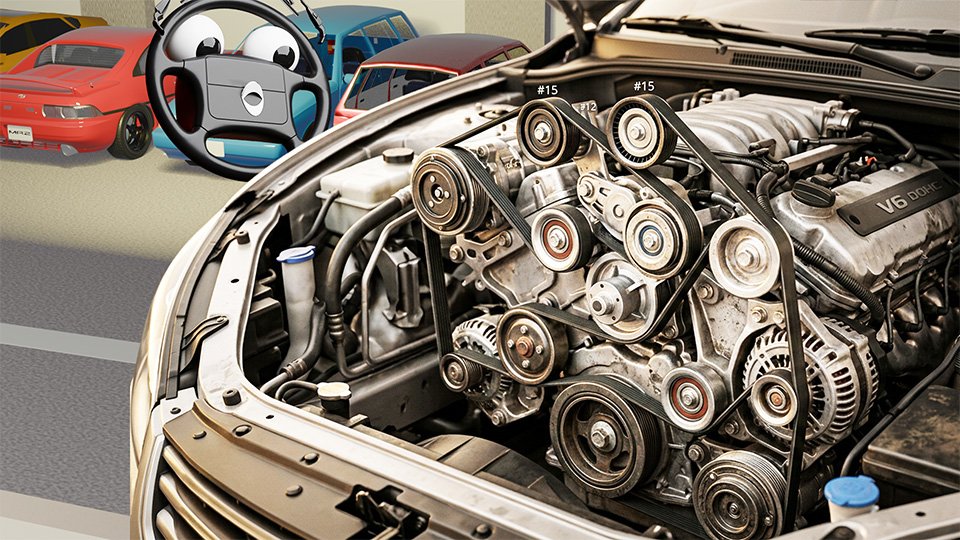
Armando popped his hood once to check his oil and noticed a single long, winding rubber belt snaking around what looked like every pulley under there, and assumed it must power something fairly minor, since surely something that important would have more than one belt backing it up.

πŸ”„ One Belt, Several Jobs

First, a little bit of engine gizmology:

Your car has an electrical system. When the engine is running, all of the electrical tasks are powered by the alternator.

Your car has power steering. When you turn the wheel, a pump pushes hydraulic fluid through pistons to make the car easier to steer.

Your car has air conditioning. When you switch it on, the A/C system’s compressor gets to work cooling the air.

Your car has a cooling system of its own. When the engine is running, coolant is pushed all through it with a water pump.

The serpentine belt (named for its winding, snake-like path around multiple pulleys) is typically the single belt that does the most work.

This one belt drives the alternator , the power steering pump, the air conditioning compressor, and the water pump, all from one connection to the engine.

It’s not minor at all β€” it’s doing several jobs at once. None of these systems will work without it.

⚠️ What Happens If It Fails While Driving

A snapped serpentine belt doesn’t just mean losing power steering assist or AC. Since it often drives the water pump too, the engine can start overheating within a few miles with no coolant circulation at all.

What looks like a minor rubber strap failing can turn into a genuine roadside emergency fairly quickly.

πŸ” What Wear Actually Looks Like

Cracks running across the belt’s ribbed underside (not just a surface glaze, which is more cosmetic) are the classic warning sign. The belt gets hot, causing the surface glaze. Cracks in the ribbed underside tell you the belt’s getting tired.

Visible fraying at the edges of the belt, or a squealing noise on startup or when you turn the wheel, are also indicators that the belt is reaching retirement age.

Popping the hood and taking a look, or shining a flashlight along the belt’s underside, is something anyone can do β€” you’re just looking, not touching anything.

⏱️ Why It’s a Time-and-Mileage Item, Not a Wait-For-Failure One

Manufacturers typically recommend replacement around 60,000 to 100,000 miles regardless of visible condition, since rubber degrades from heat and age even on a belt that looks fine at a glance.

Getting the belt is not an option. If a mechanic tells you the belt needs replacing, that’s not a next-time option.

However, always ask to the see the used belt before you go. It should shows the signs of wear identified above, helping you know what to look for next time.

πŸ”§ Why Replacement Is Genuinely Shop Work

Swapping the belt itself means relieving tension on a spring-loaded tensioner and routing the new belt correctly around every pulley in a specific pattern.

Get the routing wrong and you can damage the belt, the tensioner, or a pulley almost immediately.

This is a legitimate professional job; your value here is recognizing the wear and getting it addressed on schedule, not doing the swap yourself.

πŸ› οΈ Gear Worth Having

HeroBeam Car Emergency Flashlight (Twin Pack) β€” shine it along the belt’s underside for a genuine look at cracking or fraying, no tools or disassembly involved.

Autel AL319 OBD2 Scanner β€” a belt-driven alternator failure often throws a charging system code worth checking alongside a visual inspection.

Vehicle Maintenance Log Book β€” note the mileage at your last belt replacement β€” the interval is long enough that it’s genuinely easy to lose track.

As an Amazon affiliate, I earn from qualifying purchases. Thank you for supporting GrumblePark.

πŸ”— Related Reads


GrumblePark is part of the WhistleBump Group β€” find the rest of the family at WhistleBump.com.

42004

Β©2026 John D Reinhart/GrumblePark.com β€” All rights reserved

How to Check Your Car Before a Long Road Trip

Ten minutes in the driveway can prevent the exact roadside disaster everyone remembers for the wrong reasons. Here’s the whole checklist, explained for someone who’s never popped the hood on purpose.

Armando has, on more than one occasion, packed the car, loaded the family, strapped questionable amounts of gear to the roof, and pulled out of the driveway for a genuinely long drive without so much as glancing under the hood on the reasonable-sounding theory that the car’s been running fine all month, so it’ll probably keep running fine for one more week.

Somewhere in Ohio, this theory tends to reveal its flaws.

πŸŽ’ Welcome to Auto Maint 101: The Pop Quiz Nobody Studied For

Here’s the good news up front: none of what’s below requires you to actually understand your engine, own a toolbox, or know the difference between anything and anything else under the hood.

This is a look-and-notice checklist, not a fix-it-yourself one.

Ten minutes of walking around your own car with fresh eyes before you ask it to do something much harder than the school run.

⏰ Do This a Day Early, Not the Morning Of

Here’s the trap almost everyone falls into, including people who know better: doing this checklist the morning of departure, car already packed, kayaks already strapped down, everyone already in the “let’s go” mindset.

At that point, a genuine inspection quietly turns into a glance β€” pop the hood, look for smoke or steam, see neither, close it, call it checked. That’s not actually catching anything; it’s just confirming the car isn’t currently on fire, which was never really in doubt.

The fix is almost embarrassingly simple: run this checklist the day before, or even two days before, while there’s still time to actually act on whatever you find.

A low tire becomes a five-minute stop at a gas station instead of a decision to just risk it. A cracked belt becomes a quick shop visit instead of a problem you now have to choose whether to ignore.

The entire value of a pre-trip check comes from having room to respond to it β€” do it with zero slack in the schedule, and you’ve built yourself an inspection that can only ever say yes.

πŸ›ž Tires First, Because They’re the Only Part Actually Touching the Road

Every other system in your car is optional in an emergency. Tires are not β€” they’re the one part with zero backup plan.

Check the pressure while they’re “cold” (meaning the car’s been sitting for a few hours, not fresh off a drive) using a small gauge pressed onto the valve stem β€” that’s the little rubber nub sticking out of the wheel with a cap on it.

Compare the number against the sticker inside your driver’s door jamb, not the number printed on the tire itself (that’s a different, unrelated number β€” the tire’s maximum rating, not your car’s recommended pressure).

While you’re down there, run a hand across the tread and glance for anything embedded, or any cracking on the sidewall β€” the tall rubber wall between the tread and the wheel.

Don’t forget the spare. It’s easy to assume it’s fine because you’ve literally never looked at it.

πŸ›’οΈ Fluids: The Under-the-Hood Circuit, Explained Like You’ve Never Opened It

Pop the hood (usually a small lever near the driver’s footwell, sometimes paired with a second release you pull right at the hood itself. Check your owner’s manual once and you’ll never forget it again.

Under the hood you’ll find a handful of translucent plastic containers with lines printed on the side marking “full” and “low.” That’s it. That’s the whole skill.

Oil, coolant, brake fluid, and washer fluid all get the same five-second glance: is the level between the lines?

If yes, move on. If it’s below the low line, that’s worth topping off before you go, not something to discover at mile 200.

πŸ”‹ Battery and Belt: The Thirty-Second “Nothing Weird, Right?” Check

Find the long rubber loop winding around several pulleys near the front of the engine β€” that’s the serpentine belt, and all you’re doing here is eyeballing it for cracks or fraying, the same way you’d glance at a shoelace to see if it’s about to give out. A belt that’s been fine for months of easy driving around town has a way of picking the middle of a six-hour highway stretch to reconsider its life choices.

Look at the two metal posts on top of your battery β€” if you see a crusty, blue-white buildup that looks vaguely like something growing in a fridge that’s been forgotten about, that’s corrosion. You should probably mention it to a mechanic before a long trip rather than after.

That corrosion is a completely typical thing to find β€” nearly every battery develops some over time. The challenge is that it acts like an insulator, getting in the way of the electrical connection, which can make it harder for the battery to deliver full power even if it’s otherwise perfectly healthy.

Cleaning it yourself is genuinely doable with the right tools, or an auto parts store can point you to what you need β€” some will even clean it for you on the spot if you’re already there buying a battery, though it’s worth asking rather than assuming.

πŸ’‘ Lights and Wipers: The Stuff You Never Think About Until It’s Dark and Pouring

Have someone stand behind the car (or back up to a garage door, a window, anything reflective) while you cycle through headlights, brake lights, and turn signals β€” this takes about ninety seconds and catches a burnt-out bulb while you’re still safely in the driveway instead of getting pulled over three states from home.

And test your wipers on a dry windshield with the washer fluid running β€” streaky, dry-days-only wipers will fail you completely and immediately the moment real rain shows up, usually somewhere with zero cell signal and one van full of very disappointed kayakers.

πŸ“± The One Gadget Move Worth Making

If you own a small code reader (a cheap little device that plugs into a port under your dash and tells you, in plain English, exactly what triggered any warning light β€” covered in its own post), a thirty-second scan before a trip can catch a developing problem while you’re still standing in your own driveway with time, tools, and a phone signal, instead of three states away with neither.

πŸ“‹ The Whole Checklist, In the Order That Actually Makes Sense

  • Tires (pressure, tread, spare)
  • pop the hood, check the four fluid lines
  • glance at the belt and battery terminals
  • cycle the lights, test the wipers
  • quick code scan if you’ve got the gadget for it.

Ten minutes, maybe fifteen if something needs topping off. Genuinely cheap insurance against becoming the road trip story everyone in the family retells for the wrong reasons, forever, at every future holiday.

πŸ› οΈ Gear Worth Having

ACCUTIRE Digital Tire Gauge β€” quick, accurate pressure checks on all four tires and the spare before you go.

DEWALT 20V MAX Tire Inflator β€” if a tire’s low, bring it up to spec in the driveway instead of hoping it holds.

Autel AL319 OBD2 Scanner β€” a quick pre-trip scan catches developing issues while you’re still parked at home.

As an Amazon affiliate, I earn from qualifying purchases. Thank you for supporting GrumblePark.

πŸ”— Related Reads


GrumblePark is part of the WhistleBump Group β€” find the rest of the family at WhistleBump.com.

42010

Β©2026 John D Reinhart/GrumblePark.com β€” All rights reserved

How to Actually Read Your Owner’s Manual Maintenance Schedule

That thick book in your glovebox has a maintenance schedule buried in it. Here’s how to actually find and read it.

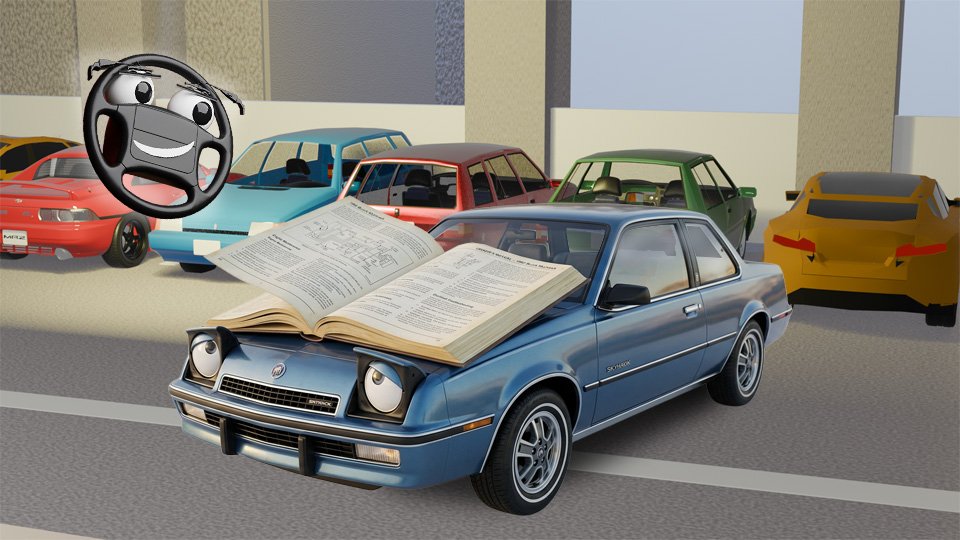
Amanda’s owner’s manual has lived in her glovebox, untouched, since the day she drove the car off the lot β€” a dense little book she assumes is mostly about which button does what, not something with actual useful instructions buried inside it. It has both. The maintenance schedule specifically is one of the most genuinely useful things in there, and almost nobody opens it.

πŸ“– It’s Usually Two Schedules, Not One

Most manuals split maintenance into β€œnormal” and β€œsevere” driving conditions.

Now, to car makers, severe covers more than off-roading. Frequent short trips, extensive idling, stop-and-go city traffic, and extreme heat or cold all commonly count as severe.

A lot of ordinary commuters technically fall under the severe schedule without realizing it, which means shorter intervals than the headline number most people remember.

πŸ”’ Reading the Interval Table

The schedule is typically laid out as a grid β€” mileage or time intervals down one side, specific services (oil change, tire rotation, air filter, spark plugs, and so on) across the top, with marks showing which service happens at which interval.

It looks intimidating mostly because of the density, not the content β€” each row is really just answering β€œat this mileage, what needs attention.”

⏱️ Mileage OR Time, Whichever Comes First

Nearly every interval is listed as both a mileage figure and a time figure (β€œevery 5,000 miles or 6 months, whichever comes first”).

A car driven rarely still needs certain services on the time interval β€” fluids age and rubber degrades whether or not the odometer is moving.

πŸ” Finding It When the Manual Feels Like a Maze

Look in the table of contents for β€œMaintenance,” β€œScheduled Maintenance,” or β€œService Intervals” β€” it’s almost always its own dedicated section, usually toward the back of the book.

Although you’ll find the maintenance schedule near the back of the book, don’t hesitate to take a moment and read through any topics that interest you on your way back there. The manual can be really helpful!

🧭 Why This Beats Guessing or Going by Feel

The schedule reflects actual engineering testing for your specific vehicle.

Following it is the single most direct way to avoid both wasting money on unnecessarily early services and risking damage from stretching intervals too far.

And, it’s the exact list to hand a mechanic or quick-lube shop so they’re servicing what’s actually due, not just whatever’s easiest to upsell.

πŸ› οΈ Gear Worth Having

Vehicle Maintenance Log Book β€” once you’ve found the schedule, this is where you actually track your progress against it.

Autel AL319 OBD2 Scanner β€” for the services the schedule doesn’t cover β€” an actual code reading when something goes wrong between intervals.

Haynes Repair Manual (for your specific vehicle) β€” a deeper, model-specific companion to the owner’s manual, useful for understanding exactly what each scheduled service actually involves.

As an Amazon affiliate, I earn from qualifying purchases. Thank you for supporting GrumblePark.

πŸ”— Related Reads


GrumblePark is part of the WhistleBump Group β€” find the rest of the family at WhistleBump.com.

42001

Β©2026 John D Reinhart/GrumblePark.com β€” All rights reserved

How to Keep a Maintenance Log (and Why It’s Worth the Five Minutes)

A maintenance log takes five minutes to start and can save you from years of guessing about your own car. Here’s why it’s worth the tiny bit of friction.

Armando genuinely cannot say, with any confidence, when he last changed his oil. He has a rough sense β€” “sometime this spring, probably” β€” built entirely on vibes rather than any actual record, and if you’d asked him to explain why he’s never written any of it down, the honest answer is that it never felt like something he was the kind of guy who did.

Log books felt like a thing serious car people kept. He just drives the thing.

🧠 Here’s the Secret: It’s Not About Being a “Car Person”

A maintenance log isn’t a badge of automotive seriousness β€” it’s just a to-do list with dates on it, and you already know how to keep one of those.

If you’ve ever jotted down a doctor’s appointment or set a reminder to renew your license, you already have every skill this requires.

The only thing standing between Armando and a maintenance log is the belief that it belongs to a different kind of person than him. It doesn’t. It belongs to anyone tired of guessing.

πŸ“ Why Your Memory Alone Genuinely Isn’t Enough

This isn’t a personal failing. Car maintenance happens infrequently enough, and blends together closely enough from one service to the next, that “I’ll just remember” quietly stops working for basically everyone somewhere around the second or third year of ownership.

You’re not bad at this. Nobody’s memory is built for it.

✍️ What Actually Belongs in the Log

Date, mileage, and specifically what was done β€” oil type and brand, which filter, which shop if you didn’t do it yourself.

That’s genuinely the whole format. No categories to master, no special vocabulary, just four or five words and two numbers, written down in the same place every time. Every time.

πŸ’° The Payoff That Shows Up Later, When You Least Expect It

A documented maintenance history is a genuinely persuasive selling point when the time comes to sell or trade the car in β€” real, concrete proof it was cared for, not just your word for it.

And in the meantime, it quietly prevents the kind of expensive mistake nobody plans for.

Without a record, it’s easy to either mistakenly pay for a service you already did, or skip one you assumed you’d already handled. Without it, you’re kind of at the mercy of the service guy.

πŸ“± Paper or Digital β€” Whichever One You’ll Actually Touch Again

A glovebox notebook works exactly as well as a phone app, provided you actually use it consistently.

There’s no “correct” system here, only the one you won’t abandon after the second entry β€” so pick whichever one feels like the least friction, not whichever one feels the most official.

The glovebox version rides with the car, making it super convenient to update. But it needs a pen or pencil. Oops.

The digital version is always with you on your phone. But you need to remember to update it. Oops.

🌱 The Honest Encouragement

You don’t need to go back and reconstruct years of missing history to make this worth starting.

Write down today’s date and mileage, right now, even with nothing before it β€” and from this point forward, you’re simply not guessing anymore.

That’s the whole win. It starts the moment you write the first line, not once you’ve caught up on the past.

πŸ› οΈ Gear Worth Having

Vehicle Maintenance Log Book β€” a simple, glovebox-sized paper log for anyone who’d rather write it down than open an app.

Autel AL319 OBD2 Scanner β€” pairs naturally with a log β€” note the code, the date, and the fix together for a complete picture.

Haynes Repair Manual (for your specific vehicle) β€” keep it alongside the log so the schedule and the record live in the same place.

As an Amazon affiliate, I earn from qualifying purchases. Thank you for supporting GrumblePark.

πŸ”— Related Reads


GrumblePark is part of the WhistleBump Group β€” find the rest of the family at WhistleBump.com.

42008

Β©2026 John D Reinhart/GrumblePark.com β€” All rights reserved

Maintenance vs. Repair: Why the Distinction Saves You Money

Maintenance and repair get lumped together as “car stuff,” but the distinction between them is where the real money is.

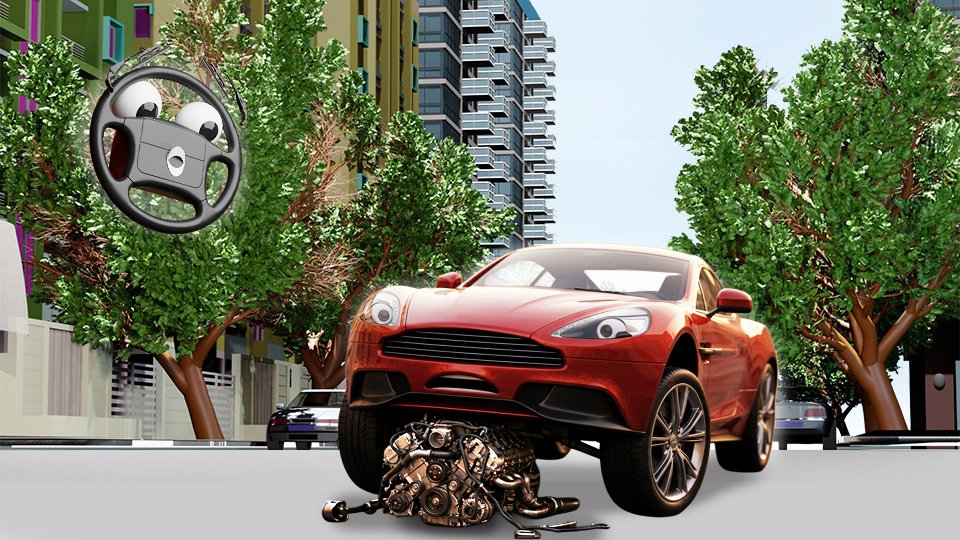
Amanda has always mentally filed everything car-related into one single, undifferentiated bucket labeled “car stuff that costs money” β€” an oil change, a brake job, the time her alternator died on a random Tuesday, all just interchangeable entries on the same long list of things her car occasionally demands from her wallet. It’s a completely understandable way to think about it. It’s also exactly the framing that makes it so easy to skip the cheap stuff β€” right up until the cheap stuff turns into the picture above.

πŸš— What You’re Looking At

That’s not a repair. That’s what happens after a repair got ignored long enough to become a catastrophe β€” an engine that didn’t just break, it evacuated the premises.

Somewhere in that car’s history, there was a much smaller, much cheaper, much less dramatic moment where something could’ve been caught early.

This post is about that moment, and how to actually recognize it before it becomes a headline photo.

βš–οΈ Two Totally Different Categories, Wearing the Same Costume

Maintenance and repair both cost money, both happen to your car, and both involve a mechanic at some point β€” which is exactly why they get mentally lumped together. They’re actually opposites.

Maintenance is scheduled and preventive: something done on a known timeline, before anything’s actually gone wrong, specifically to keep it that way.

Repair is unscheduled and reactive: fixing something that’s already failed, usually at the worst possible moment, usually costing a lot more than the maintenance that would’ve prevented it.

πŸͺ’ How a Cheap Fix Turns Into an Expensive One

Here’s the pattern, and it repeats across nearly every system in a car:

Somewhere in your engine is a length of tough rubber called the serpentine belt. Shaped almost like a long, looping shoelace, it winds around several pulleys and quietly powers your AC, your power steering, and a few other things you’d genuinely miss if they quit working.

Replacing it on schedule is a cheap, routine service β€” done before anything’s wrong, over in an afternoon.

Ignore it long enough, though, and it eventually just snaps mid-drive, sometimes taking your engine’s cooling system down with it, and a cheap belt replacement quietly becomes an entire engine overheating on the side of the road.

Same story with something like your transmission’s fluid β€” the stuff that keeps its internal gears shifting smoothly. A fluid change is a modest, forgettable service. Ignoring it long enough can mean the transmission itself needs rebuilding β€” a repair that costs many times more than every fluid change that could’ve prevented it, combined.

πŸ’° The Math That Makes This Worth Actually Caring About

As a rough rule of thumb, routine maintenance typically costs a fraction of what the equivalent neglected repair ends up costing β€” often several times less.

That’s not a scare tactic; it’s just what happens when a small, scheduled job gets replaced by an unscheduled, urgent one.

πŸ•³οΈ Why Repairs Win the Attention War, Even Though They Shouldn’t

A repair demands your attention because the car is loudly, obviously broken right now β€” it won’t start, it’s making a terrible noise, there’s smoke.

Maintenance never announces itself like that. Nothing feels wrong yet, which is exactly why it’s so easy to put off β€” and exactly the window where fixing it is cheapest and easiest.

βœ… The Mental Shift Worth Making

Every item on a maintenance schedule is really a small, cheap insurance policy against a much bigger bill later.

Taking an oil change or a belt inspection as seriously as an actual breakdown isn’t paranoid β€” it’s just the financially smarter way to think about it.

Stay ahead of the schedule, and you keep your car firmly in “boring, affordable, ask a shop to handle it” territory instead of “photographed on the side of the road” territory.

πŸ› οΈ Gear Worth Having

Vehicle Maintenance Log Book β€” the tool that keeps maintenance from quietly sliding into the repair category by making it easy to see what’s coming due.

Autel AL319 OBD2 Scanner β€” catch developing issues early, while they’re still a maintenance item and not yet a repair.

As an Amazon affiliate, I earn from qualifying purchases. Thank you for supporting GrumbleBump.

πŸ”— Related Reads


GrumblePark is part of the WhistleBump Group β€” find the rest of the family at WhistleBump.com.

42007

Β©2026 John D Reinhart/GrumblePark.com β€” All rights reserved

What Your Check Engine Light Codes Actually Mean (Before You Panic)

One little light, thousands of possible meanings, and a piece of plastic under your dash that’ll tell you exactly which one β€” for less than the price of a decent lunch.

Armando’s check engine light came on once, stayed on for three days, and put him through a genuinely stressful stretch of imagining his engine launching itself dramatically out through the hood in a fireball β€” full slow-motion, soundtrack-swelling, gold-sedan-having-the-worst-day-of-its-life kind of imagining.

The actual code pointed to a loose gas cap.

Armando had, in fact, been picturing an entire Michael Bay production over a piece of plastic he could’ve hand-tightened in four seconds.

🎬 The Movie in Your Head vs. the Actual Situation

Here’s the thing about that little orange engine icon lighting up on your dashboard: it has exactly one setting.

It doesn’t blink twice for “kind of a big deal” and once for “not really.” It doesn’t get brighter for worse problems. It’s one light, doing one job β€” telling you something triggered it β€” and it leaves the entire rest of the story a total mystery.

Which means your brain, deprived of actual information, is more than happy to fill in the blanks with the worst possible movie it can think of.

The good news: the real story is sitting right there, waiting to be read. You just need the right two-dollar cable.

πŸ”Œ What an OBD2 Port Actually Is (Not a Droid, Promise)

Every car built since 1996 has a little plug tucked under the dash, usually somewhere near your knees close to the steering column, called an OBD2 port β€” OBD stands for “on-board diagnostics,” which is a fancy way of saying “the car’s been quietly taking notes on itself this whole time.”

It looks like a small trapezoid-shaped socket with a bunch of pins inside, kind of like an old video game cartridge slot.

That’s it. That’s the whole mystery object.

πŸ“– What a “Code” Actually Is

A code reader β€” a small, inexpensive gadget, sometimes not much bigger than a car key fob β€” plugs directly into that port. The instant you turn the key, it can ask your car’s computer a simple question: “hey, why’d you turn that light on?”

And the car answers, in a short string like “P0301.” That’s a trouble code β€” the car’s own internal shorthand for one specific, identifiable problem.

P0301 specifically means “cylinder 1 is misfiring” (a cylinder is one of the individual combustion chambers where your engine actually burns fuel β€” most cars have four, six, or eight of them working together).

The scanner doesn’t just spit out the code either β€” most will translate it into an actual plain-English sentence right there on the little screen. You’re not decoding anything yourself. You’re just pressing a button and reading a sentence.

🚦 Steady Light vs. Flashing Light: The One Distinction That Actually Matters

This is the single most useful thing in this entire post, so worth committing to memory even before you own a scanner.

  • A steady, unmoving check engine light means “something’s off, get it looked at soon” β€” genuinely fine to keep driving normally for now, the automotive equivalent of a to-do list item, not a fire alarm.
  • A flashing check engine light means the engine is actively misfiring badly enough, right now, to be damaging an expensive part called the catalytic converter with every mile you keep driving. That one actually does call for pulling over and getting towed rather than pressing on.

Steady: finish your errands, deal with it this week.

Flashing: different situation, different urgency.

πŸ’Έ Why You Don’t Need a Dealership, or a Drama

A basic code reader costs less than what most shops charge just to plug in and tell you what it says.

That means you can know exactly what’s wrong before you ever set foot in a repair shop, walk in already informed instead of anxious, and skip the imaginary fireball entirely.

βš–οΈ When It’s Actually Worth Worrying About

A loose gas cap or a minor evaporative-system code (the system that manages fuel vapor β€” genuinely one of the most common, least dramatic reasons this light comes on at all) are common, low-stakes causes that plenty of people drive around with for days without incident.

A misfire code, especially paired with a flashing light or the car actually running rough, is the one that deserves real, prompt attention.

Same light. Very different stories underneath it β€” which is exactly why reading the actual code beats guessing every single time.

πŸ› οΈ Gear Worth Having

Autel AL319 OBD2 Scanner β€” an affordable, reliable entry point for reading and clearing codes yourself.

Innova 5610 OBD2 Scanner β€” a step up with bi-directional testing and no subscription fees, for anyone going deeper into DIY diagnostics.

Ancel AD410 OBD2 Scanner β€” a rugged, glovebox-friendly option that’s hard to damage with regular use.

As an Amazon affiliate, I earn from qualifying purchases. Thank you for supporting GrumblePark.

πŸ”— Related Reads


GrumblePark is part of the WhistleBump Group β€” find the rest of the family at WhistleBump.com.

42006

Β©2026 John D Reinhart/GrumblePark.com β€” All rights reserved

Spark Plugs: When and Why They Need Replacing

Spark plugs do their job thousands of times a minute and nobody thinks about them until a mechanic says the word. Here’s how to know if he’s right.

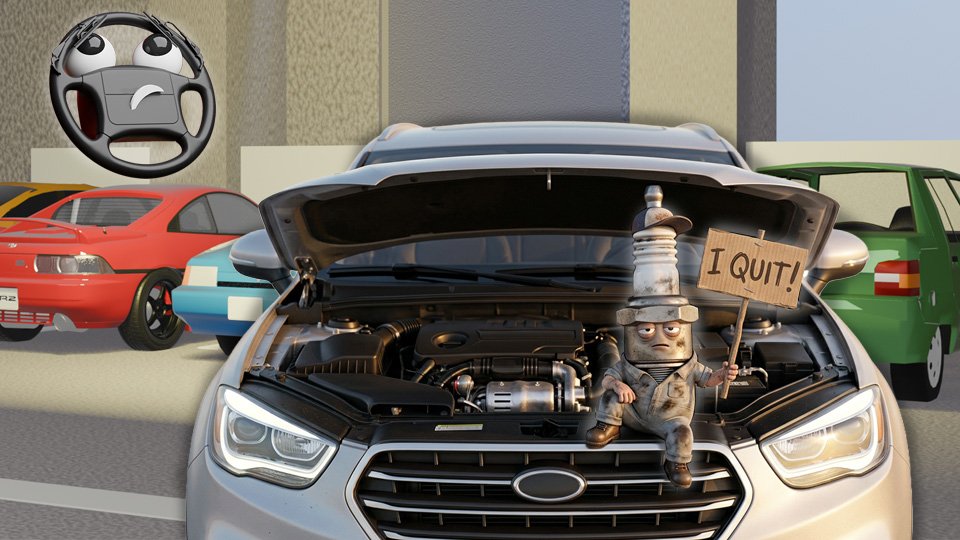
Armando knows spark plugs exist, knows they’re somewhere in the engine, and has never once had a clear picture of what they actually do beyond a vague sense that they’re related to “the spark that makes the car go” β€” which, it turns out, is basically correct.

But the day’s going to come when his mechanic is going to tell him “you need new spark plugs” and he’s going to wonder if this is a needless upsell or the real deal.

⚑ How a Spark Plug Actually Makes the Engine Run

Your engine makes power through a repeating four-step cycle happening inside each cylinder, over and over, thousands of times a minute.

  • First, the piston pulls down and draws in a mix of air and fuel.
  • Second, the piston pushes back up, squeezing that mixture into a small, dense pocket.
  • Third β€” and this is where the spark plug comes in β€” right at the exact top of that squeeze, the spark plug fires a tiny, precisely timed spark that ignites the compressed mixture, and that controlled explosion is what actually shoves the piston back down with real force.
  • Fourth, the piston rises one more time to push the spent exhaust out, and the whole thing starts over.

That’s the entire power stroke, the one moment in the whole cycle that produces the push driving your car forward.

The spark has to land at exactly the right instant.

A worn spark plug doesn’t fire cleanly or reliably at that precise moment anymore, so this whole cycle starts running a little sloppy, in every cylinder, every single time it repeats β€” which, at highway speed, is thousands of times a minute.

πŸ“‰ Why They Wear Out At All

A spark plug’s whole job is turning your car’s ordinary, low-power electricity into something strong enough to jump through air β€” which normally doesn’t conduct electricity at all. A part called the ignition coil takes your car’s everyday 12 volts and boosts it up to tens of thousands of volts, way more forceful than usual. That huge jolt arrives at the plug and punches across a tiny gap between two metal points, creating a spark hot enough to instantly ignite the fuel-air mixture sitting right there waiting for it. That spark has to land at exactly the right split second, every single time, thousands of times a minute β€” which is exactly the timing that goes haywire if something in the system (like a distributor put in backwards) throws it off.

Every single spark erodes the plug’s metal tip by a tiny amount β€” nothing you’d ever notice from one firing, but multiplied across millions of firings over months and years, that erosion gradually widens the gap the spark has to jump, weakening it. It’s not a defect. It’s just gradual, expected wear from doing its job correctly, over and over, for a very long time.

🚨 What You’d Actually Notice, Yourself, Before Any Mechanic Says a Word

This is the part worth knowing cold, because it’s your independent evidence, not something you have to take anyone’s word for. A rough, shaky idle at stoplights. Noticeably less pep when you accelerate. Worse gas mileage than usual. Trouble starting, especially on a cold morning. And if a check engine light comes on citing a “misfire,” that’s very often a spark plug problem at its root. If a mechanic tells you plugs need replacing and you’ve genuinely noticed one or more of these, that’s real corroboration β€” the story matches what you’ve actually experienced.

πŸ—£οΈ How to Tell If a Mechanic’s Being Straight With You

If none of the symptoms above have shown up at all, and a mechanic brings up spark plugs anyway during an unrelated visit β€” an oil change, say β€” that’s worth a couple of direct, easy questions, not automatic suspicion, just genuine ones: “How many miles are on the current plugs, and what type are they β€” copper, platinum, or iridium?” That matters because the honest replacement interval swings wildly by type: standard copper plugs genuinely do wear out around 20,000–30,000 miles, while platinum or iridium plugs are built to last 60,000–100,000 miles or more. A mechanic pushing a plug replacement at 25,000 miles on a car that came with iridium plugs is asking you to replace something with most of its life left. A mechanic saying the same thing about a car that’s never had its original copper plugs touched at 90,000 miles is very likely telling you something true and overdue. Same request, two very different answers, and the mileage-and-type question is what tells them apart.

πŸ“– Your Owner’s Manual Already Has the Real Number

Your car’s manufacturer specifies an exact recommended interval for your specific engine, sitting in the maintenance schedule section of your owner’s manual β€” genuinely worth a two-minute look before any conversation about spark plugs, so you’re comparing what a mechanic says against a real number instead of just trusting tone of voice.

πŸ› οΈ Gear Worth Having

Autel AL319 OBD2 Scanner β€” if a mechanic cites a misfire code, you can plug this in yourself and read the same code, so you’re confirming his diagnosis instead of just hoping he’s reading it right.

Vehicle Maintenance Log Book β€” your own written record of what’s actually been replaced and when, so “it’s probably time” from a shop can be checked against real dates instead of anyone’s memory, yours or theirs.

Haynes Repair Manual (for your specific vehicle) β€” confirms your exact car’s real manufacturer-recommended interval, so you walk into any conversation about this already knowing the right answer.

As an Amazon affiliate, I earn from qualifying purchases. Thank you for supporting GrumblePark.

πŸ”— Related Reads

GrumblePark is part of the WhistleBump group – find the rest of the family at WhistleBump.com.

42005

Β©2026 John D Reinhart/GrumblePark.com β€” All rights reserved